
Search
Remove Ads
Advertisement
Search Results

Definition
Vinland
Vinland (Old Norse Vínland, 'Wine Land') is the name given to the lands explored and briefly settled by Norse Vikings in North America around 1000 CE, particularly referring to Newfoundland, where a Viking site known as L'Anse aux Meadows...

Definition
Dissolution of the Monasteries
The Dissolution of the Monasteries was a policy introduced in 1536 CE by Henry VIII of England (r. 1509-1547 CE) to close down and confiscate the lands and wealth of all monasteries in England and Wales. The plan was...

Definition
Roanoke Colony - The Colony that Disappeared
The Roanoke Colony was England's first colony in North America, located in what is today North Carolina, USA. Established in 1585 CE, abandoned and then resettled in 1587 CE, the colonists had little regard...
Definition
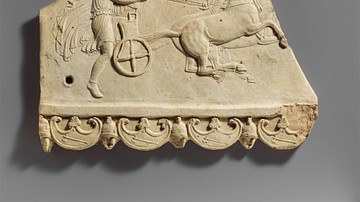
Pelops
Pelops was a Greek hero and king of Pisa in Greek mythology. As the son of Tantalus, he was a member of the cursed House of Atreus, and was cruelly sacrificed by his father in a twisted way to test the gods – an act that backfired and...

Definition
Hyperborea
In Greek mythology, Hyperborea was the land located to the far north of the known world and it was so remote it was considered even beyond the North Wind. There a legendary race known as the Hyperboreans lived and worshipped the sun...

Definition
Edo Castle
Edo Castle was a large castle built by the Tokugawa family in 17th-century Japan. It served as their seat of government for more than 260 years. After the Meiji Restoration of 1868, Edo became the capital of Japan and was renamed...

Definition
Estado da India
The Estado da India (1505-1961) was the name the Portuguese gave to that part of their empire which stretched from India to East Asia. However, in its widest sense, the name includes all Portuguese colonies east of the Cape of...

Definition
Sleipnir
Sleipnir is the eight-legged horse ridden primarily by the god Odin in Norse mythology. He is the son of the god Loki (in the form of a mare) and the stallion Svadilfari who belonged to the jötunn that built the walls of Asgard. In...
Definition
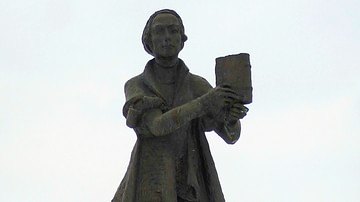
Argula von Grumbach
Argula von Grumbach (née von Stauff, l. 1490 to c. 1564) was a Bavarian theologian, writer, and reformer, who became a controversial figure after her 1523 letter To the University of Ingolstadt protesting the arrest of a young...

Definition
Taifa
Taifas ("factions" or "camps") were small independent Muslim kingdoms and principalities that emerged after the fall of hegemonic Muslim caliphates in al-Andalus – the Muslim-controlled part of the Iberian peninsula – during the High...
