
Search
Did you mean: Theogony?
Remove Ads
Advertisement
Search Results

Definition
Zvartnots Cathedral
The ruins of Zvartnots Cathedral are located on a flat plain within the Ararat Plateau between the cities of Yerevan and Etchmiadzin in Armenia's Armavir province near Zvartnots International Airport. Built in the middle of...

Definition
Romanos IV Diogenes
Romanos IV Diogenes ruled the Byzantine Empire from 1068 to 1071 CE. He was a military emperor, and his policies and campaigns served to shore up Byzantine defenses against the Seljuk Turks. However, in the aftermath of the...

Definition
Michael II
Michael II the Amorion, also known as Michael “the Stammerer”, was emperor of the Byzantine Empire between 820 and 829 CE. He founded the short-lived Amorion dynasty, named after his hometown in Phrygia, which would last until 867...

Definition
John I Tzimiskes
John I Tzimiskes was Byzantine emperor from 969 to 976 CE. Although he took the throne by murdering his predecessor Nikephoros II Phokas, John was a popular emperor. A skilled general and a competent politician, he is known for...

Definition
Michael IV the Paphlagonian
Michael IV the Paphlagonian was Byzantine emperor from 1034 to 1041 CE. He had an affair with Empress Zoe, then married her and was crowned emperor after the death of her first husband, Romanos III. He ran a competent...

Definition
Michael Psellos
Michael Psellos (1018 - c. 1082 CE) was a Byzantine historian, writer, and intellectual. Michael acted as courtier and advisor to several Byzantine emperors, and he was the tutor of Michael VII. Writing between 1042 and 1078 CE...
Definition
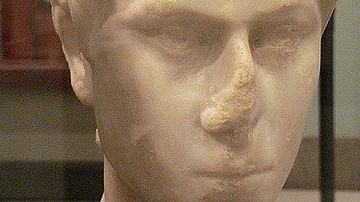
Constantius II
Constantius II ruled the Roman Empire between 337-361 CE. He was the second son of Constantine the Great and Fausta. Constantius was a devout follower of Arianism Christianity. Ruling for 24 years, he was the longest reigning son...

Article
Women in the Middle Ages
The lives of women in the Middle Ages were determined by the Church and the aristocracy. The medieval Church provided the 'big picture' of the meaning of life and one's place while the aristocracy ensured that everyone...

Article
Trade in the Byzantine Empire
Trade and commerce were essential components of the success and expansion of the Byzantine Empire. Trade was carried out by ship over vast distances, although for safety, most sailing vessels were restricted to the...

Article
Byzantine Icons
Icons, that is images of holy persons, were an important part of the Byzantine Christian Church from the 3rd century CE onwards. Venerated in churches, public places, and private homes, they were often believed to have protective...
