
Search
Remove Ads
Advertisement
Search Results

Image
Atlantide, Temple of Zeus, Agrigento
One of the massive atlantide figures from the temple of Zeus (480s BCE) in Agrigento. There were 38 such figures incorporated into the architecture of the building and each stood 7.6 metres tall. (Archaeological...
Image
Lion Temple of Jaffa
The Lion Temple of Jaffa is located in the heart of Jaffa's old quarter in what is now present-day Israel. It dates to c. 1500 BCE – 1200 BCE when the region was occupied by ancient Egypt. It is believed that the Phoenician...

Image
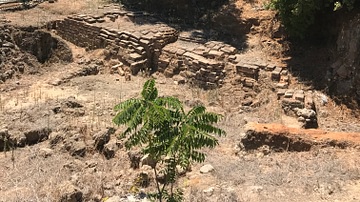
Temple Terrace, Sanctuary of Zeus Labraundos
View of the Temple Terrace of the Sanctuary of Zeus Labraundos at Ladraunda.
Image
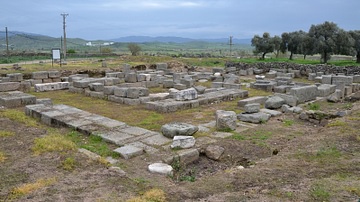
Ionic Temple of Apollo Isotimos
The ruins of the Ionic Temple of Apollo Isotimos in Alabanda, built in the 2nd century BC.
Image
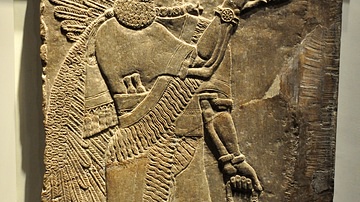
Apkallu from the Temple of Ninurta
This gypsum wall relief depicts an eagle-headed and winged man; this is a protective spirit or Apkallu. He holds a bucket and a cone, and wears an elaborate dress and accessories as well as sandals. Neo-Assyrian...

Image
Tawern Temple Complex
The Roman Temple Tawern (German: Römischer Tempelbezirk Tawern) is a reconstructed Gallo-Roman sanctuary on the Metzenberg in Tawern near Trier (western Germany). The original sanctuary was built in the 1st century CE above...
Image
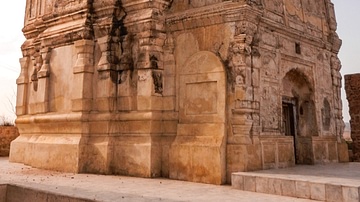
Sath Graha Central Temple
The main central temple at the Sath Graha section of Katas Raj, Chakwal, Punjab, Pakistan, an ancient Hindu site dedicated to the worship of Shiva and prior to that a Buddhist site as well. This particular building is...

Image
Gardens around Tokyo's Sensoji Temple
Dedicated to the Boddhisattva Kannon, Sensoji Temple was founded in 645 CE in what's present-day Tokyo, Japan. It is surrounded by elegant Japanese gardens and other temples.

Image
Shiva & Parvathi, Kailasanatha Temple
A majestic Shiva with his consort Parvathi, the outer pathway of Kailasanatha Temple, Kanchipuram, India. 700-720 CE.

Image
Temple of Mars Ultor, Rome
The temple of Mars Ultor ('The Avenger') in the Forum of Augustus, 1st century BCE, Rome. It was built by Augustus to commemorate the Battle of Philippi and the defeat of Julius Caesar's assassins in 42 BCE.
