
Search
Did you mean: Brahmanism?
Remove Ads
Advertisement

 This answer was generated by
 Search Results
Article
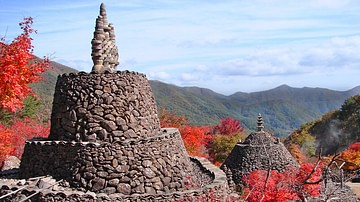
Shamanism in Ancient Korea
Shamanism was widely practised in Korea from prehistoric times right up to the modern era. It is a belief system which originated in north-east Asian and Arctic cultures, and although the term shamanism has since acquired...
Definition
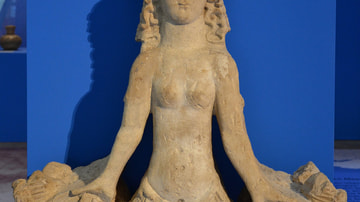
Scythian Religion
Scythian religion appears to be an amalgam of belief in a pantheon of gods grafted to more ancient animal reverence and shamanistic practice. According to their burial finds, the Scythians appear to have had a deep affinity with...

Definition
Mongol Empire
The Mongol Empire (1206-1368) was founded by Genghis Khan (r. 1206-1227), first Great Khan or 'universal ruler' of the Mongol peoples. Genghis forged the empire by uniting nomadic tribes of the Asian steppe and creating a devastatingly...

Definition
Ancient Korea
Korea, located on a large peninsula on the eastern coast of the Asian mainland, has been inhabited since Neolithic times. The first recognisable political state was Gojoseon in the second half of the first millennium BCE. From the...
Definition
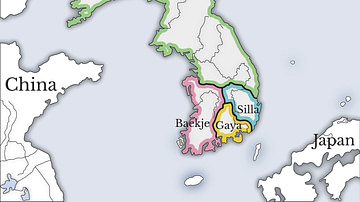
Three Kingdoms Period in Korea
The Three Kingdoms Period of ancient Korea (57 BCE – 668 CE) is so-called because it was dominated by the three kingdoms of Baekje (Paekche), Goguryeo (Koguryo), and Silla. There was also, though, a fourth entity...
Definition
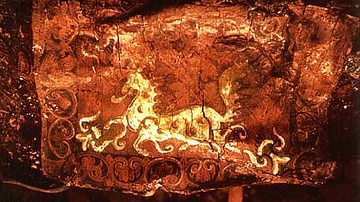
Cheonmachong
Cheonmachong is a 5-6th-century CE royal tomb of the ancient Silla kingdom of Korea located at the Daereungwon Tomb Complex in Gyeongju. It is popularly known as the 'Heavenly Horse Tomb' because of a painting of that animal on a...

Article
Ancient Korean & Chinese Relations
Contact between Korea and China goes back to mythology and prehistory. Trade developed from the Bronze and Iron Ages with raw materials and manufactured goods going in both directions for centuries thereafter. In...

Article
Women in the Mongol Empire
Women in the Mongol Empire (1206-1368 CE) shared the daily chores and hardships of steppe life with men and were largely responsible for tending animals, setting up camps, childrearing, producing food and cooking it. Having...

Article
Religion in the Mongol Empire
The Mongol Empire (1206-1368 CE) covered Asia from the Black Sea to the Korean peninsula and so naturally included all manner of religions within its borders, but the Mongols themselves had their own particular religious...
Article
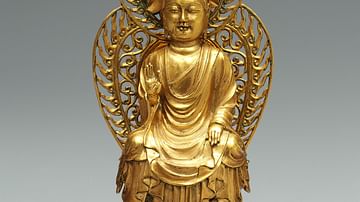
Buddhism in Ancient Korea
Buddhism, in Korean Bulgyo, was introduced by monks who visited and studied in China and then brought back various Buddhist sects during the Three Kingdoms period. It became the official state religion in all Three Kingdoms...
