
Search
Did you mean: Leo I?
Remove Ads
Advertisement
Search Results

Article
The Battle of Pelusium: A Victory Decided by Cats
The ancient Egyptians had a great reverence for life in all its forms. Life had been given by the gods and reverence for it extended beyond human beings to all living things. Although the Egyptians did occasionally eat meat, and their royalty...

Article
Ancient Egyptian Taxes & the Cattle Count
The gods of ancient Egypt freely gave their bounty to the people who worked the land, but this did not exempt those farmers from paying taxes on that bounty to the government. Egypt was a cashless society until the Persian Period (c. 525...
Article
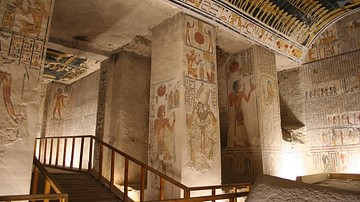
Tomb Robbing in Ancient Egypt
The tombs of the great kings and nobles of Egypt were built to safeguard the corpse and possessions of the deceased for eternity and yet, while many have endured for thousands of years, their contents often disappeared relatively quickly...

Article
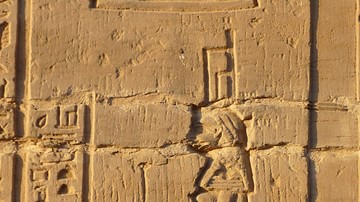
Beer in Ancient Egypt
Considering the value the ancient Egyptians placed on enjoying life, it is no surprise that they are known as the first civilization to perfect the art of brewing beer. The Egyptians were so well known as brewers, in fact, that their fame...
Article
Egyptian Medical Treatments
The ancient Egyptians experienced the same wide array of disease that people do in the present day, but unlike most people in the modern era, they attributed the experience to supernatural causes. The common cold, for example, was prevalent...

Article
Rome's Egyptian Heritage
The Eternal City of Rome is one of the places in the world with the most historical sites to visit. The list of ancient ruins, museums, churches, and other historical landmarks makes the city an Eldorado for anyone interested in history...

Video
The History of Egypt (Part 2): Biblical Connections
Dr. David Neiman details the Biblical events that, he believes, corresponds to Egyptian historical events.
Image
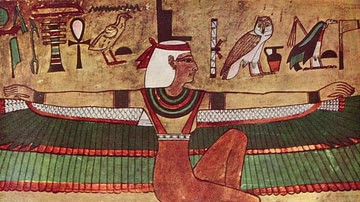
Isis Wall Painting
The goddess Isis, wall painting from the tomb of Seti I in the Valley of the Kings, Egypt, c. 1360 BCE.
Image
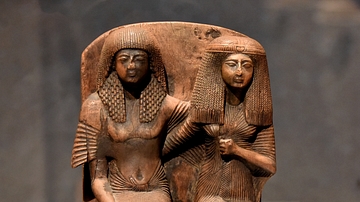
Seated Figure of Amenemope
Amenemope was a royal scribe. He sits on a claw-footed chair with his wife, Hathor, who is seated on a low stool (on a pillow). They embrace each other. Painted wood. From Tomb 265 (TT265) at Deir el-Madina, Western Thebes, Egypt. New Kingdom...
Image
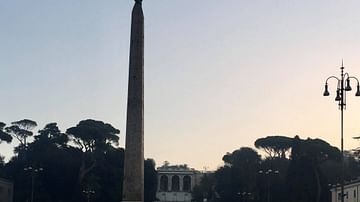
Flaminio Obelisk, Rome
The Flaminio Obelisk is believed to originate from the time of Seti I (1290–1279 BCE), and his son Ramses II (1279-1213 BCE). It was brought to Rome by Emperor Augustus (r. 27 BCE –14 CE) for the Circus Maximus, and today it stands in the...
