
Search
Remove Ads
Advertisement
Search Results
Article
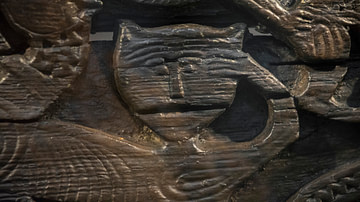
Norse Pets in the Viking Age
Pets were as important to the Norse of the Viking Age (c. 790-1100 CE) as they were to any other culture, past or present. The Vikings kept dogs and cats as pets and both feature in Norse religious iconography and literature. The Norse also...

Article
Enheduanna - Poet, Priestess, Empire Builder - Redefining the Gods for the People
Enheduanna (circa 2300 BCE) is the world's first author and was the daughter (either literally or figuratively) of the great empire-builder Sargon of Akkad (reign 2334-2279 BCE). Her name translates from the Akkadian as "high priestess of...

Article
The Five Gifts of Hathor: Gratitude in Ancient Egypt
The central cultural value of ancient Egypt was ma'at – harmony and balance – which maintained the order of the universe and the lives of the people. Keeping balance in one's life encouraged the same in one's family and, by extension outward...

Article
Truths Wrapped in Fiction: Mesopotamian Naru Literature - Originality in Writing Ancient Bestsellers
Originality in literary compositions in the ancient world did not carry the same weight and value as it does today. In recent centuries, authors have been applauded for the creation of original works and have been derided for plagiarism or...
Article
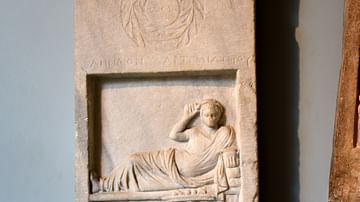
Curses & Fines on Epitaphs
The concept of a curse laid on a tomb or gravesite is best known from ancient Egypt but the practice was quite common in other civilizations of antiquity. The tomb or grave was the eternal home of the physical remains of the deceased to which...

Article
This Barking Dog - Religion and Homosexuality in the Works of Christopher Marlowe
On 5 May 1593, a series of anti-Protestant bills were posted throughout the city of London. One of the bills was written in iambic pentameter and included several references to the works of celebrated poet Christopher Marlowe (1564-1593...

Definition
Renaissance Humanism
Renaissance Humanism was an intellectual movement typified by a revived interest in the classical world and studies which focussed not on religion but on what it is to be human. Its origins went back to 14th-century Italy and such authors...

Definition
Indus Valley Civilization
The Indus Valley Civilization was a cultural and political entity which flourished in the northern region of the Indian subcontinent between c. 7000 - c. 600 BCE. Its modern name derives from its location in the valley of the Indus River...

Definition
Babylon - The Gate of the Gods
Babylon is the most famous city from ancient Mesopotamia, whose ruins lie in modern-day Hillah, Iraq, 59 miles (94 km) southwest of Baghdad. The name is derived from bav-il or bav-ilim, which in Akkadian meant "Gate of God" (or "Gate of the...

Definition
Confucianism
Confucianism is a philosophy developed in 6th-century BCE China, which is considered by some a secular-humanist belief system, by some a religion, and by others a social code. The broad range of subjects touched on by Confucianism lends itself...
