
Search
Did you mean: Saichō?
Remove Ads
Advertisement
Search Results
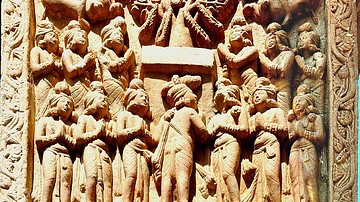
Image
Homage of King Suddhodana, Sanchi Stupa 1, Eastern Gateway
Homage of King Suddhodana, Sanchi Stupa 1, Eastern Gateway, Right pillar, inner top panel.

Video
India-Sanchi (Buddhist/Great Stupa)
Sanchi: The Buddhist vihara at Sanchi, famous for its Great Stupa is located at Sanchi Town in Raisen District of the state of Madhya Pradesh, India, it is 46 km north-east of Bhopal. The Great Stupa at Sanchi...
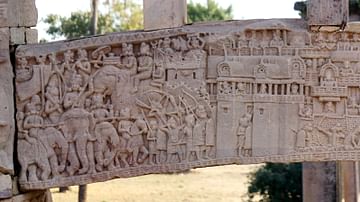
Image
“War over the Buddha’s Relics”, Sanchi
“War over the Buddha’s Relics”. Significance: It shows a siege in progress, during the period of Ajatashatru (though it does not show any of his wars): it is a visual aid to understanding the warfare of the period...
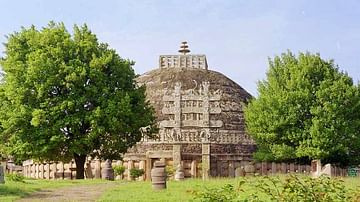
Image
The 'Great Stupa' at Sanchi
The 'Great Stupa' located at Sanchi, a village in the Raisen District of the state of Madhya Pradesh, India. This stupa was originally commissioned by the emperor Ashoka the Great in the 3rd century BCE. According...

Video
Buddhist Monuments at Sanchi (UNESCO/NHK)
On a hill overlooking the plain and about 40 km from Bhopal, India is the site of Sanchi, which comprises a group of Buddhist monuments (monolithic pillars, palaces, temples and monasteries) all in different...

Article
Ten Great Stupas from Around the World
A stupa is a reliquary containing the remains (relics) of an individual associated with great spiritual power and insight, most often (since the 3rd century BCE) with the Buddha (l. c. 563 - c. 483 BCE). The...

Definition
Stupa
A stupa (literally “heap” or “pile”) is a reliquary, a shrine containing the remains of a holy or sainted person and/or artifacts (relics) associated with them, originating in India prior to the 5th century BCE as tombs of holy men and...

Article
Rock Art History of Madhya Pradesh: Adamgarh & Nagori
Rock art, that is paintings and carvings on natural rock formations, is one of the earliest forms of creative expression and a universal phenomenon among prehistoric societies. An instrument of communication...

Definition
Ashoka the Great
Ashoka the Great (r. 268-232 BCE) was the third king of the Mauryan Empire (322-185 BCE) best known for his renunciation of war, development of the concept of dhamma (pious social conduct), and promotion of Buddhism as well as...

Image
Seven Kings Laying Siege to Kushinagara
Architrave of seven kings laying siege to Kushinagara, photograph by Biswarup Ganguly, 2013. Located in Sanchi, Madhya Pradesh, India, at the Sanchi Stupa Buddhist complex, this architrave depicts seven kings...
