
Search
Remove Ads
Advertisement
Search Results

Image
Korean Royal Wedding Re-enactment
A modern re-enactment of a traditional Korean wedding. Such richly embroidered clothes could only be worn by women of the royal or ‘sacred bone’ (seonggol) class in the Korean bone rank system used in the Silla period...
Image
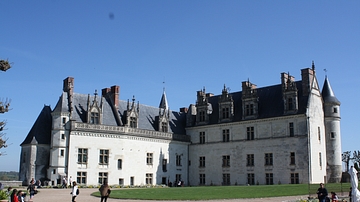
Inner Court, Royal Lodge, Chateau d'Amboise
The inner court side of the Royal Lodge at the 15th century CE Chateau d'Amboise, Amboise, France.
Image
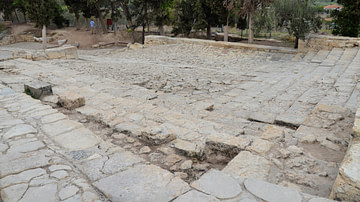
Theatral Area & Royal Road of the Palace of Knossos
View of the Theatral Area of the Palace of Knossos (Crete) and the Royal Road right below.
Image
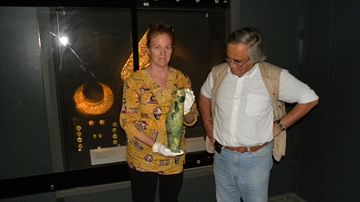
Professor Theodore Antikas with Laura-Wynn Antikas Holding the Shorter Greave from the Royal Tomb of Vergina
Professor Theodore Antikas with Laura-Wynn Antikas holding the shorter greave from the Royal Tomb of Vergina in front of the display cabinet in the Archaeological...
Image
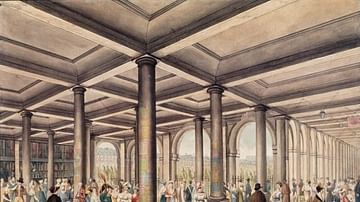
Galleries of the Palais-Royal, c. 1800
Galleries of the Palais-Royal, c. 1800. By an anonymous author.
Bibliothèque nationale de France, Paris.
Image
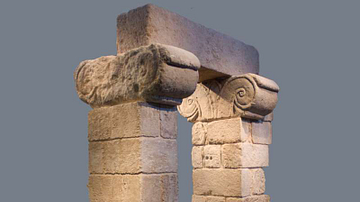
Royal Fortress Gate, Hazor
This object is an ancient Israelite royal fortress gate, made out of limestone. It was excavated from Hazor and dates to the Iron Age II (9th BCE). (The Israel Museum, Jerusalem) ©The Israel Museum, Jerusalem. Used with...

Image
Alabaster Relief of an Assyrian Royal Attendant
Alabaster work relief of an Assyrian royal attendant, from the northwest palace of Ashurnasirpal II. Reign of Ashurnasirpal II, 883-859 BCE, Nimrud (ancient Kalhu), Mesopotamia. (The Burrell Collection...
Image
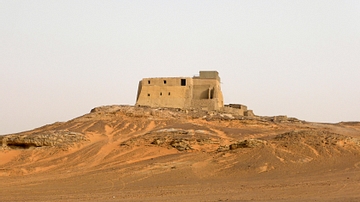
Royal Palace, Old Dongola
The remaining part of the royal palace of Old Dongola, Sudan. Built c. 1002 CE, it was converted into a mosque in 1317 CE.
Image
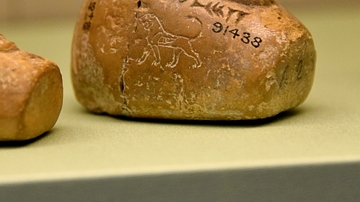
Royal Duck-shaped Weight from Nimrud
The lion engraved on this duck-shaped weight shows that this is an official palace weight and therefore a royal property. Neo-Assyrian Period, 800-700 BCE. From the North-West Palace at Nimrud, Northern Mesopotamia...
Image
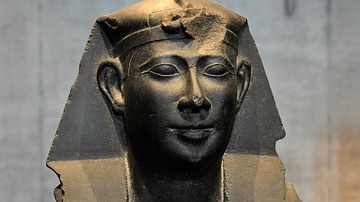
Egyptian Royal Statue
Basalt head of a royal statue; the depicted person is unknown. Ptolemaic period, 2nd century BCE. (State Museum of Egyptian Art, Munich, Germany).
