
Search
Did you mean: Roman Mosaics?
Remove Ads
Advertisement
Search Results
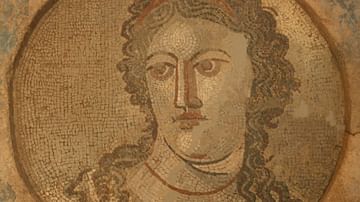
Image
Roman Mosaic of Mnemosyne
A Roman mosaic of the Titan Mnemosyne (Memory), mother of the nine Muses. 2nd century CE, Tarraco. (Archaeological Museum, Tarragona, Spain)
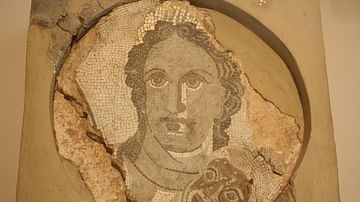
Image
Roman Mosaic of Thalia
A Roman mosaic of Thalia, Muse of comedy. 2nd century CE, Tarraco. (Archaeological Museum, Tarragona, Spain)
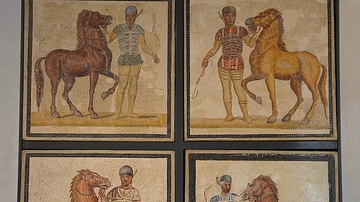
Image
Roman Mosaic with Charioteers
Mosaic depicting a charioteer and horse from each of the four circus factions (Red, White, Blue, and Green), 3rd century CE (Palazzo Massimo all Terme, Rome). Chariot-racing was the most popular sport in ancient Rome, and the Blues and Greens...
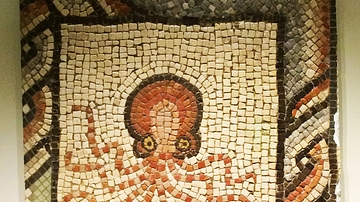
Image
Roman Mosaic with Octopus
This mosaic with an octopus is made of limestone and dates from the 2nd-3rd century CE. It is from Villaquejida (León), Spain. (Museo Arqueológico Nacional, Madrid)

Article
Ancient Cyprus: A Travel Guide
Lying at the crossroads of the eastern Mediterranean, the island of Cyprus has long been a meeting point for many of the world's great civilizations. Situated where Europe, Asia and Africa meet, its location shaped its history of bringing...

Article
A Roman Trail in the Moselle Valley
The Moselle Valley is Germany's oldest winegrowing region. The Romans brought viticulture to this area and planted vines along the Moselle River 2000 years ago. After settling the region c. 50 BCE and establishing the city of Trier (Augusta...

Article
Visitor's Guide to Ancient Dion
Dion is located at the foot of Mount Olympus in the north of Greece, in what would have been ancient Macedon. It takes its name from the most important Macedonian sanctuary dedicated to Zeus ("Dios” meaning "of Zeus”). Legend claims this...

Article
Roman Mosaics
Roman mosaics were a common feature of private homes and public buildings across the empire from Africa to Antioch. Not only are mosaics beautiful works of art in themselves but they are also an invaluable record of such everyday items as...

Image
Centaur, Roman Mosaic
Roman mosaic found at Hadrian's Villa depicting a pair of centaurs fighting wild cats, c. 130 CE. The mosaic is made of thousands of small, closely set tesserae (1-2 millimiters) called "opus vermiculatum." (Altes Museum, Berlin, Germany.)

Image
Season, Roman Mosaic
A Roman floor mosaic dating to the 3rd century CE and depicting one of the four Seasons. Black and white mosaics were very popular throughout the Roman period in Italy. Provenance: via Prenestina, Rome. (Palazzo Massimo, Rome)
