
Search
Remove Ads
Advertisement
Search Results

Definition
Saichō
Saichō, also known as Dengyo Daishi (767-822 CE), was a monk and scholar who founded the Buddhist Tendai Sect in Japan. Based on the teachings of the Chinese Tiantai Sect, Saichō's simplified and inclusive version of Buddhism grew in...

Definition
Book of Amos
The Book of Amos is a prophetic book of the Hebrew Bible largely dating to the 8th century BCE and considered to be scripture by modern-day Jews and Christians. The work chronicles the visions that the ancient author of this book...

Definition
Minamoto Clan
The Minamoto clan was an extended family group which dominated Japanese government and the imperial court in the 12th and 13th centuries CE. The clan famously defeated their arch rivals the Taira in the Genpei War of 1180-1185 CE...
Definition
Daigoji
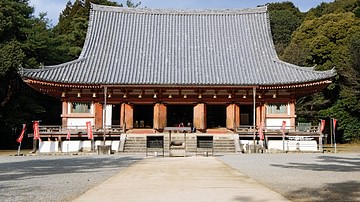
Daigoji is a Shingon Buddhist temple complex in Kyoto (ancient Heiankyo), Japan, which was founded in 874 CE by the scholar monk Shobo (aka Rigen Daishi). The site established close ties with the imperial family and became an important...

Definition
Ryujin
Ryujin (aka Ryu-o) is the dragon king, sea god, and master of serpents in Japanese mythology. With his magic jewels he is responsible for the tides, and he represents both the perils and bounty of the sea and so was especially relevant...

Definition
Magnus Maximus
Magnus Maximus (c. 355 - August 28, 388 CE) was a Roman usurper and Western Roman Emperor from 383-388 CE. He was a prominent general in the Roman army, particularly in the province of Britain. In 383 CE he usurped the Western...

Definition
Song Dynasty
The Song (aka Sung) dynasty ruled China from 960 to 1279 CE with the reign split into two periods: the Northern Song (960-1125 CE) and Southern Song (1125-1279 CE). The Northern Song ruled a largely united China from their capital...

Definition
The Hittites
The Hittites occupied the ancient region of Anatolia (also known as Asia Minor, modern-day Turkey) prior to 1700 BCE, developed a culture apparently from the indigenous Hatti (and possibly the Hurrian) people, and expanded their...

Definition
Emperor Taizu of Song
Emperor Taizu (960-976 CE), formerly known as Zhao Kuangyin, was the founder of the Song (aka Sung) dynasty which ruled China from 960 to 1279 CE. Taizu settled for a territorially smaller but more unified and prosperous China...
Definition
Emperor Wuzong of Tang
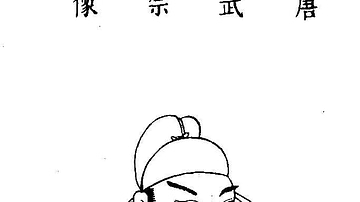
Wuzong of Tang (also Wu-Tsung, formerly Li Yan) reigned as emperor of China from 840 to 846 CE. He is best remembered today for his persecution of Buddhists, the worst such attack in all of China's history, and his early...
