
Search
Remove Ads
Advertisement

 This answer was generated by
Search Results

Article
The Life of Diogenes of Sinope in Diogenes Laertius
Diogenes of Sinope (c. 404-323 BCE) was a Greek Cynic philosopher best known for holding a lantern to the faces of the citizens of Athens claiming he was searching for an honest man. He was most likely...

Image
Suez Canal Company Building, Port Said
A photograph of the Suez Canal Company Building, Port Said, Egypt. Taken during the First World War (1914-18)
Imperial War Museums

Article
Found In the Grass
Found In the Grass is a legend of the Algonquian-speaking nations of the Plains Indians and one of the most famous. The story is told in many different versions, but the best-known comes from the Cheyenne and features the child...

Image
Portrait of a Man Said to Be Christopher Columbus
Portrait of a man said to be Christopher Columbus (1446 - 1506). Oil on Canvas. Created in 1519. Christopher Columbus was a Genoese explorer (identified as Italian) who became famous in his own time...
Article
The Life of Aristippus in Diogenes Laertius
Aristippus of Cyrene (l. c. 435-356 BCE) was a hedonistic Greek philosopher who taught that the meaning of life was pleasure and that the pursuit of pleasure, therefore, was the most noble path one could...
Article
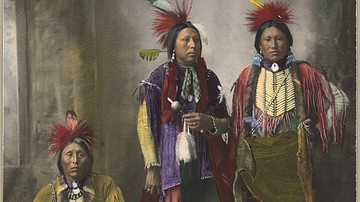
Saynday Tales
Saynday tales are popular legends of the Kiowa nation featuring the trickster figure Saynday who, like other Native American tricksters, sometimes appears as a hero, sometimes as a villain, and other times as a clownish buffoon...
Article
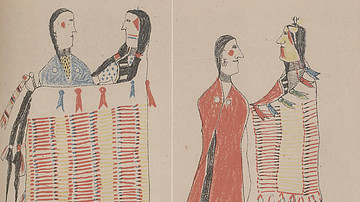
Ehyophsta Legend
Ehyophsta is a Cheyenne legend of the heroine, Ehyophsta, the Yellow Haired Woman, who first brought the buffalo to the people. When she accidentally breaks a taboo, the buffalo vanish until they are brought back later by the...
Definition
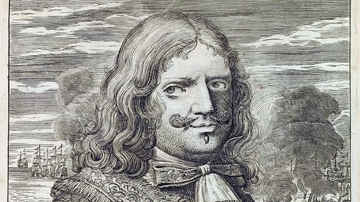
Henry Morgan
Sir Henry Morgan (c. 1635-1688) was a Welsh privateer who operated in the Caribbean against the Spanish Empire and then became Lieutenant Governor of Jamaica. Morgan was a charismatic and able military leader who masterminded devastating...

Definition
Intolerable Acts
The Intolerable Acts, also known as the Coercive Acts, were five laws passed by the Parliament of Great Britain in 1774 to punish the Thirteen Colonies of British North America for the Boston Tea Party. Though the acts primarily...
Article
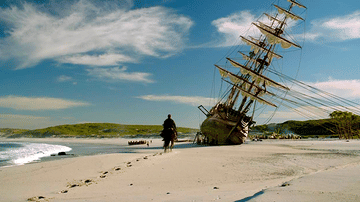
Pirate Havens in the Golden Age of Piracy
The buccaneers who roamed the Spanish Main and the pirates who plundered the Caribbean and the Indian Ocean during the Golden Age of Piracy (1690-1730) needed a place of refuge where they could share out and...
