
Search
Remove Ads
Advertisement
Search Results
Image
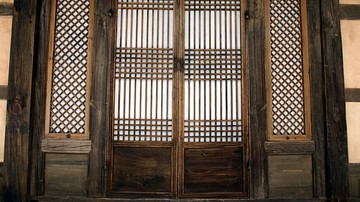
Korean Hanji Paper Doors
Traditional door and windows of a Korean hanok house using hanji paper. Andong City, Gyeongsangbuk-do, South Korea

Image
18th-century CE Tobacco Paper
Tobacco paper for Sharpe's Best Virginia, at Fleet Street, London, c. 1725-1775 CE.
British Museum, London.
Image
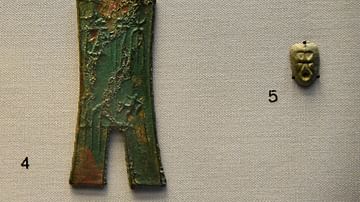
Money of the Chu State, China
The Chu State in south-east China had a unique culture of its own, yet also interacted with other states. This is reflected in the variety of its coinage: small bronze coins (known as "ant-nose" money modelled on cowrie...
Image
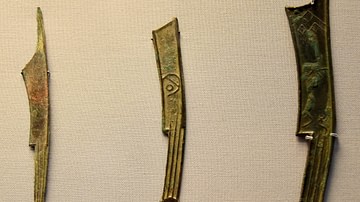
Knife Money from Ancient China
Knife money of the Warring States period retained some features of the real tools, including the ring and the strengethening ridges on the handle. The States in the north and north-east issued knife money. 1. Zhao...

Video
Korean Traditional Paper: Hanji
Korean paper (or hanji) is the name of traditional handmade paper from Korea. Hanji is made from the inner bark of Paper Mulberry, a tree native to Korea that grows on its rocky mountainsides. The formation aid crucial...

Video
Alain Bresson | Coinage: The Greek Way of Handling Money
Money Matters: The Development of Money through the Ancient World. A four-part series that traces the development of economic systems in the ancient world and explore how money as a financial instrument...

Image
Christ Driving the Money-changers from the Temple
Christ Driving the Money-changers from the Temple, oil on canvas painting by Theodoor Rombouts (1597-1637)
Royal Museum of Fine Arts, Antwerp.
Image
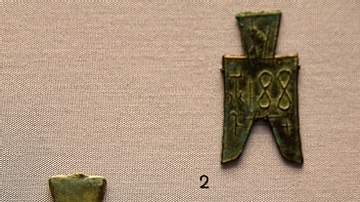
Spade Money from Ancient China
During the Warring States period, 475-221 BCE, the various states used different forms of spade money. There are several weight systems, and this is reflected in the inscriptions. 2. Zhou State, 300s BCE, Warring...

Image
When Money Talks: A History of Coins and Numismatics
When Money Talks: A History of Coins and Numismatics by Frank Holt.
Image
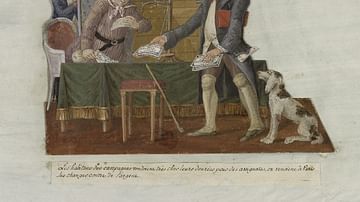
Peasant Selling his Assignats to a Money Changer
Peasant selling his assignats to a money changer, Paris, gouache by Jean-Baptiste Lesueur, c. 1789-1796.
Musée Carnavalet, Paris.
