
Search
Remove Ads
Advertisement
Search Results
Article
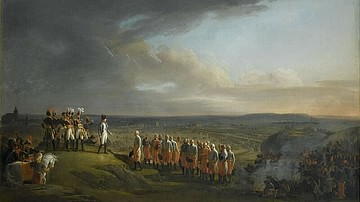
Ulm Campaign
The Ulm Campaign (25 September to 20 October 1805) was a military operation during the War of the Third Coalition (1805-1806). Through a series of maneuvers, the 210,000 men of the French Grande Armée, led by Emperor Napoleon I...
Article
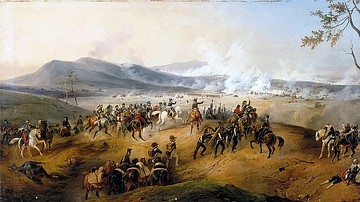
Battle of Castiglione
The Battle of Castiglione (5 August 1796) was one of the most important battles of Napoleon's Italian Campaign of 1796-97. After laying siege to the vital fortress of Mantua, General Napoleon Bonaparte and his Army of Italy...

Article
German Spring Offensive - Ludendorff's Last Chance to Win WWI
The German Spring Offensive, also called the Ludendorff Offensive after its commander, was the last major German advance of the First World War (1914-18). From March to July 1918, Ludendorff...

Article
Battle of Moscow in 1941-2 - The USSR's First Victory
The Battle of Moscow (Oct 41 to Jan 42) was Germany's first major land defeat in the Second World War (1939-45). Although Axis panzer divisions reached within 20 miles (32 km) of the Soviet capital...

Definition
Martin Luther
Martin Luther (l. 1483-1546) was a German priest, monk, and theologian who became the central figure of the religious and cultural movement known as the Protestant Reformation. Even though earlier reformers had expressed Luther's...
Definition
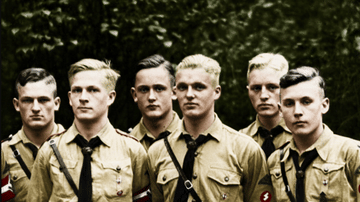
Hitler Youth
The Hitler Youth (Hitlerjugend or HJ), named after the leader of the German Nazi Party Adolf Hitler (1889-1945), was designed to indoctrinate 14-18 year-old boys into the party's way of thinking. Its activities promoted physical...

Definition
Night of the Long Knives
The Night of the Long Knives (aka Blood Purge or Röhm-Putsch) of 30 June 1934 was a purge of the Nazi Sturmabteilung (SA) paramilitary group which continued through 1 and 2 July. Adolf Hitler (1889-1945), wary of the growing...

Definition
Franz Schubert
Franz Schubert (1797-1828) was an Austrian composer of Romantic music best known for his songs, symphonies, piano music, and chamber music. Schubert's career lasted only 15 years, but he was a prolific composer. Neither a conductor...

Definition
Martin Bucer
Martin Bucer (l. 1491-1551) was a German reformer and theologian who had been a Dominican friar and priest until converted to the Protestant vision by Martin Luther (l. 1483-1546) c. 1518. Bucer is best known for his focus on unity...

Definition
Richard Strauss
Richard Strauss (1864-1949) was a German conductor and composer of both innovative late-Romantic and Modernist music. He is best known for his symphonic poems and operas like Salome and Elektra, both of which caused a sensation...
