
Search
Remove Ads
Advertisement
Search Results
Definition
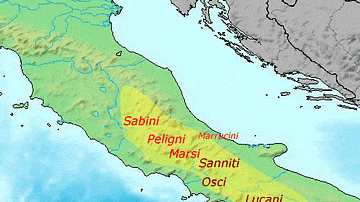
Angitia
Angitia, which also appears epigraphically as Angita, Arigitia or Anguita, was a goddess among the pre-Roman Italic and Oscan-Umbrian peoples of central Italy and believed to have persisted as a domestic cult figure well into the Roman Republic...

Definition
Uruk - The First Great City
Uruk was one of the most important cities (at one time, the most important) in ancient Mesopotamia. According to the Sumerian King List, it was founded by King Enmerkar circa 5000/4500 BCE. Uruk is best known as the birthplace of writing...

Definition
Ancient Celts
The ancient Celts were various tribal groups living in parts of western and central Europe in the Late Bronze Age and through the Iron Age (c. 700 BCE to c. 400 CE). Given the name Celts by ancient writers, these tribes and their culture...

Definition
Egyptian Hieroglyphs
The Egyptian hieroglyphic script was one of the writing systems used by ancient Egyptians to represent their language. Because of their pictorial elegance, Herodotus and other important Greeks believed that Egyptian hieroglyphs were something...

Definition
Writing - The Preservation of Human Thought and Action
Writing is the physical manifestation of a spoken language. It is thought that human beings developed language circa 35,000 BCE as evidenced by cave paintings from the period of the Cro-Magnon Man (circa 50,000-30,000 BCE) which appear to...
Definition
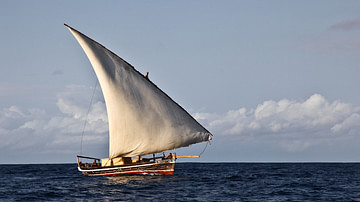
Swahili Coast
The Swahili Coast on the shores of East Africa was a region where Africans and Arabs mixed to create a unique identity from the 8th century called Swahili Culture. Swahili is the name of their language and means 'people of the coast.' The...

Definition
Parthian Culture
Stretching between China and India in the east to the Mediterranean in the west, Parthia ruled over one of the widest expanses of empire in its time and Parthian culture flourished for 500 years (247 BCE to 224 CE). While known for their...

Article
The Hellenistic World: The World of Alexander the Great
The Hellenistic World (from the Greek word Hellas for Greece) is the known world after the conquests of Alexander the Great and corresponds roughly with the Hellenistic Period of ancient Greece, from 323 BCE (Alexander's death) to the annexation...

Article
Libyan' Inscriptions in Numidia and Mauretania
When the Numidian king Massinissa (c.241-148) died, the people of Dougga (or: Thugga) decided to build a monument in his honour. A bilingual inscription (RIL 2, KAI 101) says the building was erected in the tenth reign year of his successor...

Article
Legacy of the Ancient Romans
The legacy of the ancient Romans – from both the time of the Roman Republic (509-27 BCE) and the time of the Roman Empire (27 BCE - 476 CE) – exerted a significant influence on succeeding cultures and is still felt around the world in the...
