
Search
Remove Ads
Advertisement
Search Results

Article
The Bronze Bells of Ancient Korea
The metalworkers of ancient Korea were highly skilled artists and some of their finest surviving works are the large bronze bells cast for use in Buddhist temples and monasteries. Both the Unified Silla kingdom and...

Article
Dolmens of Ancient Korea
Dolmens (in Korean: koindol or chisongmyo) are simple structures made of monolithic stones erected during the late Neolithic period or Korean Bronze Age (1st millennium BCE). In ancient Korea they appear most often near...
Article
Zen Buddhism in Ancient Korea
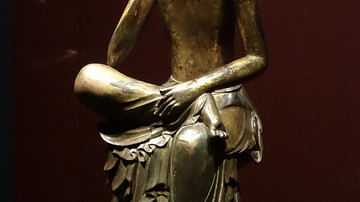
Buddhism was introduced from China to ancient Korea in the 4th century BCE and adopted as the official state religion by the Kingdoms of Baekje, Goguryeo, and Silla. The faith split into separate divisions across Asia...
Article
Shamanism in Ancient Korea
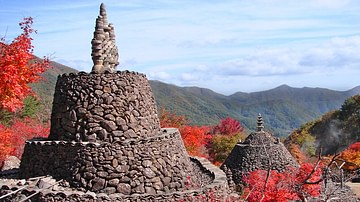
Shamanism was widely practised in Korea from prehistoric times right up to the modern era. It is a belief system which originated in north-east Asian and Arctic cultures, and although the term shamanism has since acquired...

Article
Buddhist Illuminated Scripts of Ancient Korea
The Goryeo (Koryo) kingdom ruled ancient Korea from 918 CE to 1392 CE, and it oversaw a flourishing of the arts, literature, and architecture. One of these developments was the production of finely crafted...

Article
North Africa’s Place in the Mediterranean Economy of Late Antiquity
The Mediterranean Sea was the economic focal point of the Roman Empire. Rome's armies first established an empire across these waters beginning back in the times of the Roman Republic...

Collection
Ancient Korea - The Three Kingdoms
The Three Kingdoms period in ancient Korea from the 1st century BCE to 7th century CE actually saw four states dominate the peninsula: Silla, Gaya, Baekje, and Goguryeo. All shared similar characteristics of government...

Article
15 Complete Hyangga Songs from Ancient Korea
Hyangga was a form poetical 'country song,' distinct from contemporary Chinese songs, which were written in the Silla and Goryeo kingdoms of ancient Korea between the 7th and 10th century CE. The indigenous...
Lesson Pack
Ancient Korea
Detailed lesson plan on ancient Korea, divided into three units with varied materials, sources, and ready-to-print activities. Homework, assessment and all keys included. Table of Contents - Unit 1: The...

Definition
Sejong the Great
King Sejong the Great (15 May 1397 to 8 April 1450 CE) ruled Korea from 1418 to 1450 CE as the fourth king of the Joseon Dynasty (also spelled Choson). One of only two Korean kings called 'the Great' today, Sejong had a major...
