
Search
Remove Ads
Advertisement
Search Results

Definition
Ashur - The First Great Assyrian City
Ashur (also known as Assur) was an Assyrian city located on a plateau above the Tigris River in Mesopotamia (today known as Qal'at Sherqat, al-Shirqat District, northern Iraq). The city was an important center...

Definition
Thales of Miletus
Thales of Miletus (l. c. 585 BCE) is regarded as the first Western philosopher and mathematician. He was born and lived in Miletus, a Greek colony in Ionia (modern Turkey) referenced as the birthplace of Greek Philosophy because...
Definition
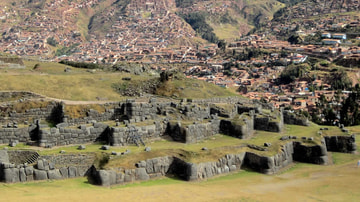
Sacsayhuaman
The Sacsayhuaman (also Saksaywaman or Saqsawaman, meaning 'Royal Eagle') fortress-temple complex lies at the northern edge of the former Inca capital Cuzco. Constructed during the reign of Pachacuti (1438-1471 CE) and his successors...

Definition
Anaximenes
Anaximenes of Miletus (l. c. 546 BCE) was a younger contemporary of Anaximander and generally regarded as his student. Known as the Third Philosopher of the Milesian School after Thales (l. c. 585 BCE) and Anaximander (l. c. 610 -...

Definition
Tairona Civilization
The Tairona civilization - one of the Chibcha family tribes - flourished in northern Colombia between 200 CE and 1600 CE. Like the Muisca of Cundinamarca, the Tairona were known for their expertise in crafting and metallurgy...
Definition
Ashurbanipal
Ashurbanipal (r. 668-627 BCE, also known as Assurbanipal) was the last of the great kings of Assyria. His name means "the god Ashur is creator of an heir" and he was the son of King Esarhaddon of the Neo-Assyrian Empire. In the Hebrew...

Definition
The Ankh
The Ankh is one of the most recognizable symbols from ancient Egypt, known as "the key of life" or "cross of life" and dated to the Early Dynastic Period (c. 3150 - 2613 BCE). It is a cross with a loop at the top sometimes ornamented...

Definition
Artaxerxes II
Artaxerxes II (r. 404-358 BCE, also known as Artaxerxes II Mnemon) was the 10th monarch of the Achaemenid Empire (c. 550-330 BCE). He was the son of Darius II (r. 424-404 BCE) and Parysatis (who was Darius II's half-sister) and...

Definition
Etruscan Art
The art of the Etruscans, who flourished in central Italy between the 8th and 3rd century BCE, is renowned for its vitality and often vivid colouring. Wall paintings were especially vibrant and frequently capture scenes of Etruscans...

Definition
Artemis
Artemis was the Greek goddess of hunting, wild nature, and chastity. Daughter of Zeus and sister of Apollo, Artemis was a patron of girls and young women, and a protectress during childbirth. Artemis was widely worshipped but her most...
