
Search
Remove Ads
Advertisement
Search Results

Article
Obsidian in Mesoamerica
Obsidian is a dark volcanic glass which provides the sharpest cutting edge available in nature. Ancient Mesoamerican cultures greatly esteemed the properties of obsidian, and it was widely traded across the region. Obsidian was used to create...

Collection
The Architecture of Ancient Rome
Roman architecture was nothing if not eclectic. From ingenious underfloor heating to gravity-defying arches, the Romans added to the Classical repertoire such grandiose structures as the triumphal arch, basilica, amphitheatre, and city tower...
Article
An Illustrated Glossary of Castle Architecture
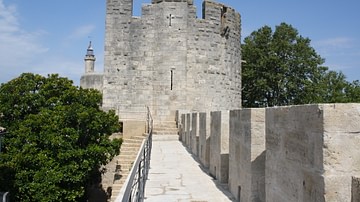
Alure (Wall Walk) The walkway along the higher and interior part of a wall which often gives access to the higher floors of towers within the wall. Typically protected by battlements. Apse A semicircular projecting part of a building...

Article
Diversity in Church Architecture in Medieval England
Medieval English churches differed in size and layout. Their original and evolving role(s), financial and material resources, and architectural fashions helped determine variability. However, their look ultimately grew from a constant symbiosis...

Image
Mesoamerican Canine Vessel
Ceramic Mesoamerican canine vessel from South-Central Veracruz, Mexico, c. 600 to c. 900. This open ceramic bowl from the Veracruz Late Classic period features a mould-made effigy of a canine resembling a xoloitzcuintle, a wrinkly, hairless...
Image
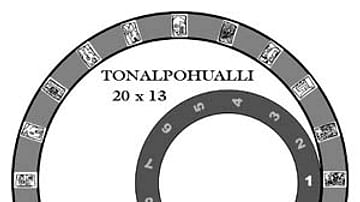
Tonalpohualli Mesoamerican Calendar
A representation of the Tonalpohualli – ‘Counting of the Days’ 260-day calendar used by ancient Mesoamerican cultures. Two systems ran simultaneously with a group of 13 numbered days combined with a group of 20 name days. Thus, each day had...

Image
Mesoamerican Ballgame Players
A ceramic vessel with painted scenes of Maya players of the Mesoamerican ballgame. Guatemala, 700-800 CE. (St. Louis Art Museum, Missouri)

Image
Mesoamerican Collecting Cochineal
An 18th-century illustration showing a Mesoamerican using the traditional method of collecting insects to make the prized cochineal dye. (The Newberry Library)

Image
Mesoamerican God 2 Rabbit
A sculpture of the Mesoamerican god known to the Aztecs as 2 Rabbit who often represented the pulque gods. These gods represented the alcoholic drink pulque and were also known as the Centzon Totochtin (400 Rabbits). 1100-1300 CE. (Poza Larga...

Image Gallery
A Gallery of Chinese Art & Architecture
Chinese culture developed from small communities such as Banpo Village (c. 4500 BCE) through the early Xia Dynasty (c. 2070-1600 BCE) and the great dynastic periods that followed after, creating some of the most striking and memorable works...
