
Search
Remove Ads
Advertisement
Search Results

Definition
Chinampas - Mexico's Human-Made Agricultural Islands
Chinampas are human-made islands built in shallow lakebeds that have fed the people of Mesoamerica and shaped local ecosystems for over a thousand years. Sometimes referred to as 'floating gardens,'...

Definition
Florentine Codex - An Encyclopedia of Life in 16th-Century Mexico
The Florentine Codex is an encyclopedic accounting of life in 16th-century Mexico and an invaluable resource for understanding the exchange between European and Indigenous cultures during...

Interview
Interview: Gods of Thunder by Tim Pauketat
Join World History Encyclopedia as they chat with Tim Pauketat all about his new book Gods of Thunder: How Climate Change, Travel, and Spirituality Reshaped Precolonial America, published by Oxford University...

Article
Dynamics of the Neolithic Revolution
The Neolithic Revolution began between 10,000 and 12,000 years ago at several widely dispersed locations across the world, when our ancestors first began planting and raising crops. Agricultural communities sprang...

Article
Day of the Dead
The Day of the Dead, known in Spanish as Día de los Muertos, is a holiday that celebrates life and honors the dead through traditions, food, decorations, and activities intended to sustain the connections between the living and...

Article
The Fall of Tenochtitlan
The fall of Tenochtitlan on 13 August 1521 was a decisive moment in the dramatic collapse of the Aztec empire which had dominated Mesoamerica. Led by Hernán Cortés (1485-1547), the Spanish conquistadors enjoyed superior...

Article
The Changing Interpretation of the Spanish Conquest in the Americas
The fall in 1519 of Tenochtitlan, the capital of the Mexica or Aztec Empire, as it was later called, laid the foundation for the Spanish colonial empire on the North American mainland...

Definition
Tarascan Civilization
The Tarascan civilization (aka the Purépecha, after their language) dominated western Mexico and built an empire that would bring it into direct conflict with that other great Mesoamerican civilization of the Post-classic...
Definition
Pulque
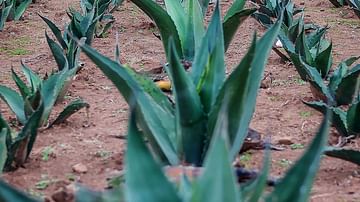
Pulque is an alcoholic drink which was first drunk by the Maya, Aztecs, Huastecs and other cultures in ancient Mesoamerica. Similar to beer, it is made from the fermented juice or sap of the maguey plant (Agave americana). In the Aztec...

Definition
Palenque
Located in the foothills of the Chiapas altiplano of modern Mexico, Palenque was an important Maya city which flourished between c. 600 and 750 CE. The name Palenque derives from the Spanish, meaning 'fortified place', but the original...
