
Search
Remove Ads
Advertisement
Search Results
Image
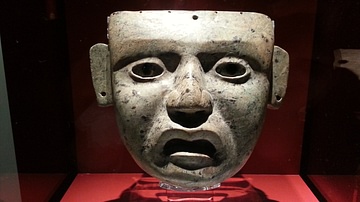
Teotihuacan Style Mask
This mask (900-1521 CE) is made of greenstone with obsidian eyes. Teotihuacan predated the Aztec civilisation by over 1,000 years. The Aztec's were curious archaeologists and they were impressed by the ruins of the civilisations...

Article
The Origins of British Pub Names
Pubs remain a prominent feature of the rural and urban landscapes of Britain, but their names very often date back to medieval times. Red lions, white horses, and colourful characters peer from pub signs as landlords...

Article
The Nimrud Dogs - The Security System of Ancient Mesopotamia
The Nimrud Dogs, five clay canine figurines found at the ancient Mesopotamian city of Nimrud, were only a few of the many startling finds in the region in the 20th century. During the 19th century...

Article
A Praise Poem of Shulgi - A Celebration of an Ancient Famous Run
A Praise Poem of Shulgi (written circa 2020-2000 BCE) is an ancient Sumerian document celebrating the famous run of 200 miles (321.8 km) in one day made by the king Shulgi of Ur (reign 2094...
Image
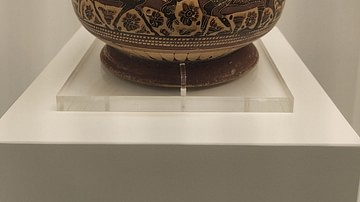
Corinthian Black-Figure Pyxis
This black-figure pyxis is decorated with ibexes and felines. This type of vessel was used as a container for cosmetics or jewellery. The decorative subjects, the elongation of the body of the animals and the schematisation...
Image
Dog Figurine from Nimrud
Bronze statuette of a dog, part of the Nimrud dogs, a Neo-Assyrian (circa 8th-century BCE) collection of dog figurines found at Nimrud, currently on display in museums at Baghdad, Iraq; Cambridge, England; New York, America...

Image
Statuette of an Enthroned Cybele Flanked by Lions & Holding a Drum
Cybele, the Great Mother Goddess of Asia Minor, was holding a phiale (a shallow libation bowl) in her missing right hand. The lion and the drum, which was played during rites in Cybele's...

Image
British Army Infantry Square
An 1875 oil on canvas painting by Elizabeth Thompson titled The 28th Regiment at Quatre Bras (a battle during the Napoleonic Wars). The British infantry is shown employing the classic defensive strategy of a square...

Image
Hydria (4th century BCE)
The hydria, as its name indicates, was used almost exclusively for carrying water (Greek hydor), essential for everyday cleansing, ritual purifications and libations. 4th-century BCE. Made from bronze. (Hellenic Museum...

Image
Attic Black-Figure Siana Cup
Theseus and the half-human, half-bovine Minotaur are flanked by three maidens and four youths, probably a connotation to the sacrificial victims sent by the people of Athens to King Minos of Crete. The iconographic subjects...
