
Search
Remove Ads
Advertisement
Search Results

Definition
Persian Literature
Persian literature differs from the common definition of “literature” in that it is not confined to lyrical compositions, to poetry or imaginative prose, because the central elements of these appear, to greater or lesser degrees...
Article
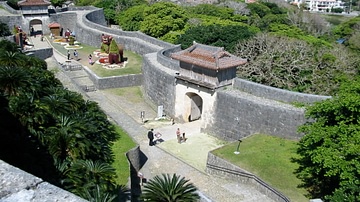
The Ryukyu Castles of Okinawa
The medieval Ryukyu castles on the island of Okinawa, Japan are impressive testimony to the kingdom's power and wealth from the 12th to 16th century. Notable castles include Shuri Castle, the royal residence, and four...

Definition
Palenque
Located in the foothills of the Chiapas altiplano of modern Mexico, Palenque was an important Maya city which flourished between c. 600 and 750 CE. The name Palenque derives from the Spanish, meaning 'fortified place', but the original...

Definition
Chaco Canyon
Chaco Canyon was the center of a pre-Columbian civilization flourishing in the San Juan Basin of the American Southwest from the 9th to the 12th century CE. Chacoan civilization represents a singular period in the history of an ancient...

Definition
Chan Chan
Chan Chan (Chimor) was the capital city of the Chimu civilization which flourished on the northern coast of Peru between the 12th and 15th centuries CE. The city was a giant metropolis populated by peoples from across the Chimu Empire...

Definition
Xochicalco
Xochicalco in central Mexico was an important hilltop centre from the 8th century CE and was a rival and successor of Teotihuacán. Architecture at the site is closely connected to that of the Classic Maya, Teotihuacan, and Veracruz...

Definition
Yaxchilan
Yaxchilan, located on the banks of the Usumacinta River in the Yucatán peninsula of Mexico, was an important Late Classic Maya centre. The Maya dated the founding of their city to 320 CE, but Yaxchilan flourished between c. 580 and...

Definition
Cusco
Cuzco (also Cusco or Qosqo) was the religious and administrative capital of the Inca Empire which flourished in ancient Peru between c. 1400 and 1534 CE. The Incas controlled territory from Quito to Santiago, making theirs the largest...

Definition
Andreas Vesalius
Andreas Vesalius (1514-1564) was the most celebrated anatomist in Europe during the 16th century and a key figure of the Scientific Revolution. Vesalius' great work was his On the Fabric of the Human Body, which contains over...

Definition
Druid
Druids were a class of individuals in ancient Celtic cultures known for their great wisdom and knowledge of traditions. Not only priests who managed all religious rituals such as sacrifices (including humans), druids were able to give...
