
Search
Remove Ads
Advertisement
Search Results
Definition
Ancient Dvin
Dvin (aka Duin), located 40 km south of modern Yerevan, was the capital of early medieval Armenia for four centuries. Founded in the 4th century CE, the city prospered and became the administrative head of the Armenian church. Remaining...

Definition
Pink and White Terraces of New Zealand
The cascading geothermal pink and white terraces of Aotearoa New Zealand were often referred to internationally and within New Zealand as the eighth wonder of the world. They were a famous tourist attraction...
Definition
Trdat the Architect
“Trdat the Architect” or Tiridates (c. 940s-c. 1020s?) was a Armenian architect who is noted for his role in the reconstruction of the Hagia Sophia's dome in Constantinople following an earthquake in the 10th century CE, as...
Definition
Hamaxia
Hamaxia (now known as Sinek Kalesi or Sinekkalesi, near the modern Alanya) was a city in western Cilicia in southern Turkey known for its lush landscape, cedar forests, and thriving timber export business. It was located on a high hill...
Article
Akrotiri Frescoes
The Bronze Age frescoes from Akrotiri on the Aegean island of Thera (modern-day Santorini) provide some of the most famous images from the ancient Greek world. Sometime between 1650 and 1550 BCE Thera suffered a devastating earthquake...

Article
Ten Great Stupas from Around the World
A stupa is a reliquary containing the remains (relics) of an individual associated with great spiritual power and insight, most often (since the 3rd century BCE) with the Buddha (l. c. 563 - c. 483 BCE). The...
Article
Illyria - Exploring Ancient Albania
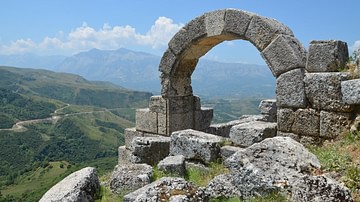
Albania is located at the crossroads of the eastern Adriatic and was known as Illyria and Epirus throughout the Classical era. It played a strategic role in ancient times and was a point of contact between Illyrian...

Article
A Visitor's Guide to Oplontis, Stabiae & Boscoreale
More than 2,000 years ago, extremely wealthy Romans lived on the sunny shores of the Bay of Naples at Pompeii and in opulent villas nearby, unconcerned about Mount Vesuvius in the distance. Julius Caesar...
Image
The Carmo Archaeological Museum
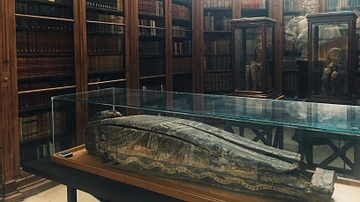
The Carmo Archaeological Museum, located within The Church of Santa Maria do Carmo which was founded in 1389 CE by D. Nuno Álvares Pereira (1360-1431 CE). Three mummies are on display: one ancient Egyptian mummy from...
Image
The Church of Santa Maria do Carmo
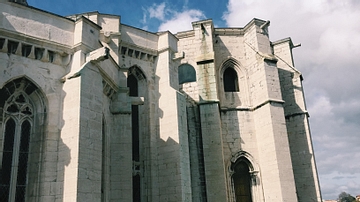
Church of Santa Maria do Carmo, famous for its beautiful Gothic architecture, established in 1389 CE by D. Nuno Álvares Pereira (1360-1431 CE). Now housing The Carmo Archaeological Museum.
