
Search
Did you mean: Xibalba?
Remove Ads
Advertisement
Search Results

Definition
Ahura Mazda
Ahura Mazda (also known as Ahuramazda, Harzoo, Hormazd, Hourmazd, Hurmuz, Ohrmazd, 'Lord' or 'Spirit') is the highest spirit worshipped in Zoroastrianism, the old Mede and ancient Persian mythology which spread across Asia predating...

Definition
Mithridates VI
Mithridates VI (120-63 BCE, also known as Mithradates, Mithradates Eupator Dionysius, Mithridates the Great) was the king of Pontus (modern-day northeastern Turkey) who was regarded by his people as their savior from the oppression...
Definition
Tonatiuh
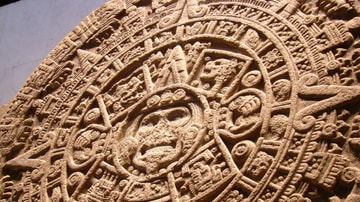
Tonatiuh, 'Turquoise Lord,' was the 5th and present sun in the Aztec view of the cosmos and the fierce sun god of several other Postclassic Mesoamerican cultures, including the Toltecs. It was thought that only the regular offering...

Definition
Julius Caesar
Gaius Julius Caesar was born 12 July 100 BCE (though some cite 102 as his birth year). His father, also Gaius Julius Caesar, was a Praetor who governed the province of Asia and his mother, Aurelia Cotta, was of noble birth. Both...

Definition
Manyoshu
The Manyoshu or 'Collection of Ten Thousand Leaves' is an anthology of ancient Japanese poems compiled c. 759 CE during the Nara Period but including many earlier works. The most likely person to have assembled the collection is Otomo...

Definition
Genpei War
The Genpei War (1180-1185 CE), also known as the Taira-Minamoto War, was a conflict in Japan principally between two rival clans: the Minamoto and Taira, for control of the imperial throne. The civil war was punctuated by a typhoon...

Definition
Todaiji
Todaiji is an ancient temple complex in Nara, Japan. Founded in 738 CE and officially opened in 752 CE when Nara was the capital, the temple is the headquarters of the Buddhist Kegon sect. The temple has a 500-ton sculpture of the Buddha...

Definition
Ninigi
Ninigi-no-Mikoto, or simply Ninigi, is the grandson of the supreme Shinto deity Amaterasu, the sun goddess. He is the son of Ama-no-Oshiho-mimi and, descending to earth as the first just ruler, he brought with him gifts from Amaterasu...

Definition
Bede
Bede (c. 673-735 CE) was an English monk, historian, and scholar who lived in the Kingdom of Northumbria. He is at times referred to as the Venerable Bede or Bede the Venerable. He was a monk at the double monastery of Monkwearmouth-Jarrow...
Definition
Hachiman - Origin of the Kamikaze Wind
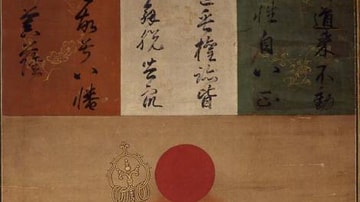
Hachiman is the ancient Shinto god or kami of war, divination, and culture. He is famously credited with sending the kamikaze or 'divine wind' which twice dispersed the invading fleets of Mongol ruler Kublai Khan...
