
Search
Remove Ads
Advertisement
Search Results
Image
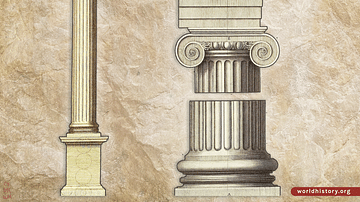
The Ionic Order, Classical Orders of Architecture
The Classical Orders of Architecture (Doric, Ionic, Corinthian, Tuscan, and Composite), originating in ancient Greece and refined by the Romans, are fundamental design principles that significantly influence classical and neoclassical structures...

Article
The Horse-rider Theory in Ancient Japan
The 'horse-rider theory' is a controversial proposal that Japan was conquered around the 4th or 5th century CE by a culture from northern Asia to whom the horse was especially important. Although archaeological evidence and genetics point...
Image
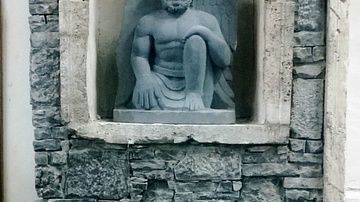
Reconstruction of Gandharan Architecture
A wall panel recreated using typical materials and decorative techniques at Quaid-e-Azam University to showcase Gandharan Architecture for students. The panel contains a structural wall created using typical small diaper masonry, with some...

Image
Pages from Serlio's Seven Books on Architecture
Pages from 'Seven Books on Architecture' by the Italian Renaissance architect Sebastiano Serlio (c. 1475-1554 CE). 1551-1554 CE. (Bayerische Staatsbibliothek, Munich)

Quiz
Innovations & Architecture in Ancient Rome
Innovations Innovation architecture roman ancient Rome Aqueducts Bridges Basilicas Roman baths Temples Theatres Amphitheatres Triumphal Arches The Horrea Corinthian Doric Ionic Patronage

Image
Features of Hindu Architecture
A diagram illustrating the principal features of Hindu temples. This example is the Kandariya Mahadeo temple at Khajuraho, Madhya Pradesh, India, c. 1025 CE.
Video
Digging History 7: The Architecture and Engineering of Rome
The Romans began building with local materials, wood, clay, and tuff (see Episode 3 for local materials and geology of the city). There are many sources from antiquity, but a good place to start is with the writings of Vitruvius (on architecture...

Definition
Meiji Restoration
The Meiji Restoration was a political event that took place in Japan in 1868. In it, the Tokugawa family, a warrior clan that had ruled Japan for more than 260 years, was overthrown by a group of political activists who proclaimed that their...
Definition
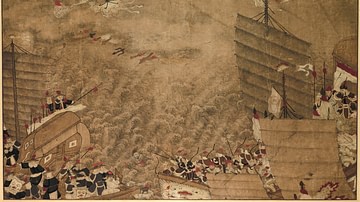
Wako - The Medieval Pirates of Southeast Asia
Wako (aka wokou and waegu) is a term used to refer to Japanese (but also including Chinese, Korean, and Portuguese) pirates who plagued the seas of East Asia from Korea to Indonesia, especially between the 13th and 17th centuries CE. Besides...

Definition
Seven Lucky Gods
In Japanese folklore the Shichifukujin are the Seven Lucky Gods who may also be known as the Seven Gods of Happiness or the Seven Gods of Good Fortune. The seven gods are in fact of diverse origin as some are originally from Buddhism, some...
