
Search
Remove Ads
Advertisement
Search Results

Collection
Norse-Viking Culture
Norse-Viking culture is frequently misrepresented in popular media which emphasizes the rugged, militaristic aspect of the people. In reality, Norse culture placed a high value on appearance, personal hygiene, and religious...
Image
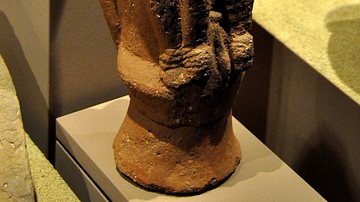
Cat Statue from the Nok Culture
A human-headed cat statue from modern-day Nigeria, Nok culture, 500 BCE to 200 CE.
State Museum of Egyptian Art, Munich.

Image
Mississippian Culture Projectile Points
These stone projectile points date from c. 900-1540 CE and were made by members of the Mississippian culture, which flourished in what is now the United States from c. 900-1500 CE. This set of artifacts were...

Image
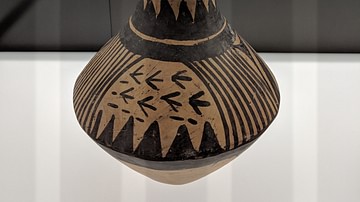
Majiayao Culture Linear Design Pottery
Pottery vessel with linear whirl design from China, Gansu or Qinghai Province, Majiayao culture, late 4th / early 3rd millennium BCE.
Exhibited at the Rietberg Museum, Zurich, Switzerland.
Image
Jar With Stylized Landscape, Majiayao Culture
A pottery jar with stylized landscape from Gansu or Qinhai Province, China. Produced by the Majiayao Culture, late 4th / early 3rd millennium BCE.
Exhibited at Museum Rietberg, Zurich, Switzerland.
Image
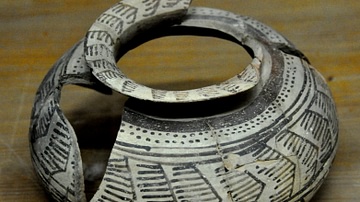
Painted Pottery from the Samarra Culture
This partially broken painted pottery dates back to the Samarra culture, Mesopotamia, 6th millennium BCE. (The Sulaimaniya Museum, Iraq).

Collection
Aztec Religion & Culture
Aztec religion and culture flourished between c. 1345 and 1521 and, at its height, influenced the majority of the people of northern Mesoamerica. Great monarchs such as Montezuma imposed Aztec ideals across the area of...
Image
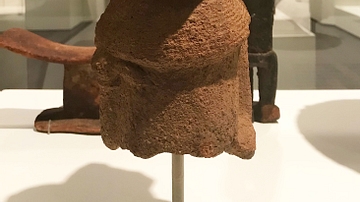
Nok Culture Fragment of a Figure
As a result of erosion and mining, one of the oldest and most sophistcated art-producing cultures known in sub-Saharan Africa came to light in the mid-20th century. Hundreds of hollow figures, heads, and fragments...
Image
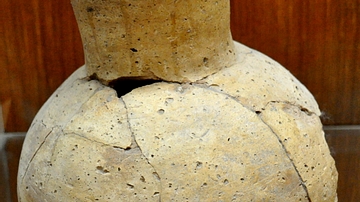
A Jar from Hassuna Culture
This ball-body jar was found in the Faida district of the modern city of Musil, Ninawa Governorate, Iraq. It dates back to the Hassuna period, 6th millennium BCE. (The Sulaimaniya Museum, Iraq).
Image
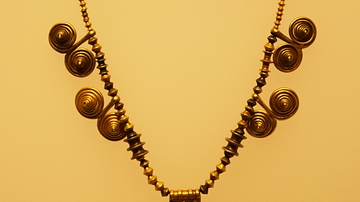
Trialeti Culture Necklace
This golden necklace was made by people who belonged to the ancient Trialeti culture. They flourished during the late-3rd and early-2nd millennium BCE. Many exquisite items crafted in gold and silver by the Trialeti culture...
