
Search
Did you mean: Homer?
Search Results

Definition
Cerberus
Cerberus (also spelt Kerberos) is a vicious three-headed dog in Greek mythology, who guards the entrance to the underworld. He allowed the souls of the dead to enter Hades but prevented the living (except for a few exceptions) from entering...
Definition
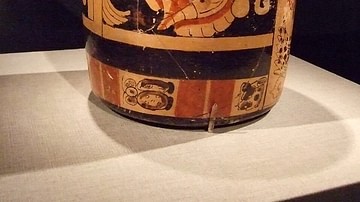
Chocolate in Mesoamerica
Chocolate was one of the most desired foods of Mesoamerica and was consumed by the Olmec, Maya, and Aztec civilizations, amongst others. Its consumption even spread via trade routes to other parts of the Americas including the Chaco Canyon...

Definition
Ancient Jordan
Jordan is a country in the Near East bordered by Israel, Syria, Iraq, and Saudi Arabia. The country's name comes from the Arabic Al Urdun, referencing a fortified site but also meaning "prominence", though various sources also claim the name...

Definition
John the Baptist
John the Baptist (d. c. 30 CE) was a 1st-century CE itinerant preacher in Judea. We do not know his full name, but he is recognized by his activity. 'Baptizer' (Greek: baptizo) was translated directly into English and meant 'to immerse' or...

Definition
Kykeon
Kykeon (from the Greek “to mix, stir”) was a beverage of water and barley (sometimes flavored with mint or thyme) popular among the working, 'lower' class of ancient Greece. In Homer's Illiad it is described as a mixture of water, barley...

Definition
Samson
Samson was one of the last judges in the Hebrew Book of Judges who arose as a leader of the Jews when they settled in Canaan. He was a Nazirite, known for his incredible strength, the secret of which was discovered by Delilah who betrayed...

Article
Food & Drink in the Elizabethan Era
Food and drink in the Elizabethan era was remarkably diverse with much more meat and many more varieties of it being eaten by those who could afford it than is the case today. Storage of food was still a problem and so fresh produce was grown...

Article
Food & Agriculture in Ancient Greece
The prosperity of the majority of Greek city-states was based on agriculture and the ability to produce the necessary surplus which allowed some citizens to pursue other trades and pastimes and to create a quantity of exported goods so that...

Article
Aztec Food & Agriculture
The Aztec civilization, which flourished in central Mexico between c. 1345 and 1521 CE, was able to provide an astonishingly wide range of agricultural produce thanks to a combination of climatic advantages, diverse artificial irrigation...
Article
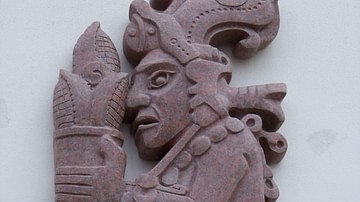
Maya Food & Agriculture
For the Maya, reliable food production was so important to their well-being that they closely linked the agricultural cycle to astronomy and religion. Important rituals and ceremonies were held in honour of specialised workers; from beekeepers...
