
Search
Remove Ads
Advertisement
Search Results

Definition
Chidambaram
Chidambaram (Cidambaram) is an important Chola temple site in Tamil Nadu, southern India. Most of the temples at Chidambaram were built in the 12th and 13th centuries CE. The site is dominated by the huge gateway tower of the Nataraja temple...

Article
Madhubani Paintings: People’s Living Cultural Heritage
Mithila, a region in the state of Bihar, northern India (and also stretching into Nepal), has an important tradition of knowledge in the form of paintings. Madhubani paintings (also known as Mithila paintings) have been practised by the women...

Article
Ten Great Persian Poets
Persian literature derives from a long oral tradition of poetic storytelling. The first recorded example of this tradition is the Behistun Inscription of Darius I (the Great, r. 522-486 BCE), carved on a cliff-face c. 522 BCE during the period...

Definition
Stupa
A stupa (literally “heap” or “pile”) is a reliquary, a shrine containing the remains of a holy or sainted person and/or artifacts (relics) associated with them, originating in India prior to the 5th century BCE as tombs of holy men and evolving...
Definition
Ashvins
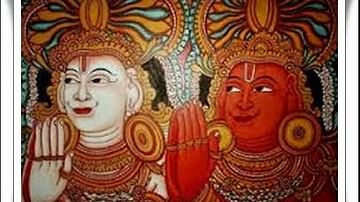
The Ashvins (aka Asvins, Asvinau, or Asvini Kumaras) are two twin brothers of Hindu mythology, sons of the sun god Surya. They may also be referred to as the 'Horsemen' and are forever young, handsome, and athletic. They are considered the...

Definition
Upanishads
The Upanishads are the philosophical-religious texts of Hinduism (also known as Sanatan Dharma meaning “Eternal Order” or “Eternal Path”) which develop and explain the fundamental tenets of the religion. The name is translated as to “sit...

Definition
Tara
Tara is a female deity in both Hinduism and Buddhism who personifies compassion and offers salvation from the suffering of rebirth and death. She is thought to have been born of empathy for the suffering world and is regularly invoked for...

Definition
Ganesha
Ganesha (also Ganesa or Ganapati) is one of the most important gods in Hinduism. Ganesha is easily recognized with his elephant head and human body, representing the soul (atman) and the physical (maya). Ganesha is the patron of writers...

Definition
Katas Raj
The Katas Raj Temples near Chakwal in Punjab province of Pakistan are attributed to the eras of the Hindu Shahis (kings) dating from about 615-950 CE and are dedicated to Lord Shiva. As such they constitute one of the most important Hindu...
Definition
Ferdowsi
Abolqasem Ferdowsi (l. c. 940-1020 CE, also given as Abul-Qasem Ferdowsi Tusi, Firdawsi, Firdausi) is the author of the Shahnameh (The Persian Book of Kings), one of the greatest works of world literature and the national epic of Iran. He...
