
Search
Remove Ads
Advertisement
Search Results
Image
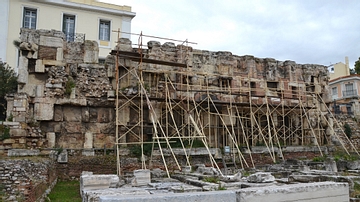
Library of Hadrian, East Wall
The Library of Hadrian in Athens showing the eastern end wall of the peristyle court. The room with the niches (now under scaffolding) would have been the library proper, where ancient scrolls were stored. c. 132-134...
Image
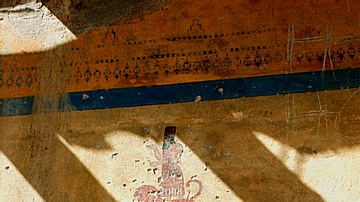
Urartian Wall Paintings
Modern reproductions of the ancient wall-paintings at Erebuni Fortress.

Video
Colosseum from the Top Wall - Ancient Rome Live (AIRC)
The Colosseum (the Flavian amphitheater) is the largest amphitheater the Romans ever constructed, with a circumference of 545 m, height of 50 m, 189m long and 156 wide. The exterior wall of travertine...
Image
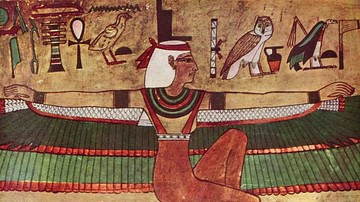
Isis Wall Painting
The goddess Isis, wall painting from the tomb of Seti I in the Valley of the Kings, Egypt, c. 1360 BCE.
Image
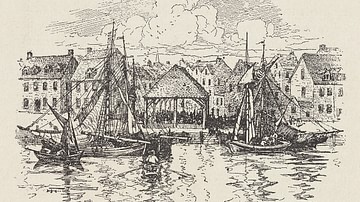
Slave Market in Wall Street, New York City, c. 1730
Slave market in Wall Street, New York City, c. 1730. Drawing published in A History of the American People (1902-1903), attributed to Harry Fenn.
New York Public Library Digital Collections.

Image
Wall Decoration, Chan Chan
Typical adobe wall decoration in Chan Chan, northern Peru. Chan Chan was the capital of the Chimu (Chimor) civilization which flourished between the 12th and 15th centuries CE.

Video
The Impenetrable Wall: Roman Body Armour
Dr Mike Bishop speaks (and is aided by live demonstrations) about 'The impenetrable wall: Roman body armour assessed' at the Greek and Roman Armour Study Day, 20th July, 2015.

Image
Coricancha Circuit Wall
Part of the surviving wall from the Inca sacred precinct of Coricancha at Cuzco, 15th century CE. The site was reused for the monastery of Santo Domingo.
Image
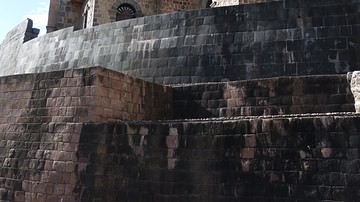
Coricancha Curved Wall
Part of the surviving wall from the Inca sacred precinct of Coricancha at Cuzco, 15th century CE. The site was reused for the monastery of Santo Domingo.

Image
Lattice Wall Decoration, Chan Chan
Typical adobe wall decoration in Chan Chan, northern Peru. Chan Chan was the capital of the Chimu (Chimor) civilization which flourished between the 12th and 15th centuries CE.
