
Search
Remove Ads
Advertisement
Search Results
Definition
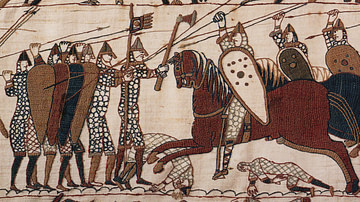
Anglo-Saxon Warfare
Anglo-Saxon warfare was characterised by frequent and violent conflicts between petty kings, which ultimately led to the rise of larger kingdoms such as the Kingdom of Mercia, the Kingdom of Northumbria, and the Kingdom of...

Definition
Imhotep
Imhotep (Greek name, Imouthes, c. 2667-2600 BCE) was an Egyptian polymath (a person expert in many areas of learning) best known as the architect of King Djoser's Step Pyramid at Saqqara. His name means "He Who Comes in Peace" and he...

Definition
Coricancha
The religious complex of Coricancha (Qorikancha) in the Inca capital at Cuzco contained the Temple of the Sun which was not only the most sacred site or huaca in the Inca religion but was considered the very centre of the Inca world...

Definition
Mystras
The city of Mystras (or Mistras) in southern Greece was the provincial capital of the Byzantine Despotate of the Morea from the 13th through the 15th centuries CE. It was founded in 1249 CE by William II of Villehardouin, and it served...

Definition
Pietro Perugino
Pietro Perugino (c. 1450-1523), real name Pietro di Cristoforo Vannucci, was an Italian Renaissance artist who created frescoes for the Vatican's Sistine Chapel and was in demand across Italy to decorate church interiors and produce...

Definition
Solomon
According to biblical tradition (and some say myth), King Solomon was the third and last king in the ancient United Kingdom of Israel. Other faiths, such as Islam and Rastafarianism, also embrace the notion of Solomon as a sagacious...

Definition
Menehune
Menehune is the term applied to short-statured, forest-dwelling creatures of Hawaiian mythology and is part of a common mythology throughout Polynesia that describes secretive, supernatural beings with human-like attributes. Mysterious...

Definition
Goguryeo
Goguryeo (Koguryo) was a kingdom which ruled northern Korea during the Three Kingdoms period from the 1st century BCE to 7th century CE. The kingdom flourished in the 5th and 6th century CE and has left a rich cultural heritage best...
Definition
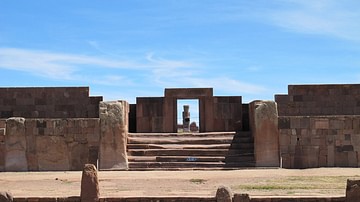
Tiwanaku
Tiwanaku (or Tiahuanaco) was the capital of the Tiwanaku empire between c. 200 - 1000 CE and is situated in the Titicaca basin. At an altitude of 3,850 metres (12,600 ft) it was the highest city in the ancient world and had a peak population...

Definition
Amorite
The Amorites were a Semitic people who seem to have emerged from western Mesopotamia (modern-day Syria) at some point prior to the 3rd millennium BCE. In Sumerian they were known as the Martu or the Tidnum (in the Ur III Period), in...
