
Search
Remove Ads
Advertisement
Search Results

Definition
Socrates
Socrates of Athens (l. c. 470/469-399 BCE) is among the most famous figures in world history for his contributions to the development of ancient Greek philosophy which provided the foundation for all of Western Philosophy. He is, in...

Definition
Delos
Delos is a Greek island in the Cyclades archipelago which was both an influential political force and, with its sanctuary to the god Apollo, an important religious centre in the Archaic and Classical periods. The island was also a major...

Definition
Libation Bearers
The play Libation Bearers was written by one of the greatest of all Greek tragedians Aeschylus (c. 525-455 BCE). Winning first prize at the Dionysia competition in 458 BCE, Libation Bearers was the second play in the trilogy The...

Definition
Aristarchus of Samos
Aristarchus of Samos (l. c. 310 - c. 230 BCE) was a Greek astronomer who first proposed a heliocentric model of the universe in which the sun, not the earth, was at the center. Although his theory was noted by other thinkers...
Definition
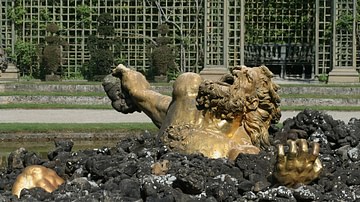
Giants
In Greek mythology, the Giants (Gigantes) are an aggressive race of creatures who were born from Gaia (the Earth) after drops of Uranus' blood fell on the Earth after he was castrated. The Giants had great strength and were fearsome to...

Definition
Artemis
Artemis was the Greek goddess of hunting, wild nature, and chastity. Daughter of Zeus and sister of Apollo, Artemis was a patron of girls and young women, and a protectress during childbirth. Artemis was widely worshipped but her most...

Definition
Battle of Leuctra
The Battle of Leuctra in 371 BCE gave Thebes a decisive victory over Sparta and established Thebes as the most powerful city-state in Greece. The victory was achieved through the daring and brilliant pre-meditated tactics of...

Definition
Celtic Coinage
The coinage of the ancient Celts, minted from the early 3rd century BCE to the 1st century CE, at first imitated Greek and then Roman coins. Celtic engravers then soon developed their own unique style, creating distinctive coins...
Definition
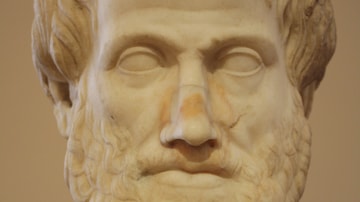
Aristotle
Aristotle of Stagira (l. 384-322 BCE) was a Greek philosopher who pioneered systematic, scientific examination in literally every area of human knowledge and was known, in his time, as "the man who knew everything" and later simply...

Definition
Helios
Helios (also Helius) was the god of the Sun in Greek mythology. Helios rode a golden chariot which brought the Sun across the skies each day from the east (Ethiopia) to the west (Hesperides). Helios was famously the subject of the Colossus...
