
Search
Remove Ads
Advertisement
Search Results
Definition
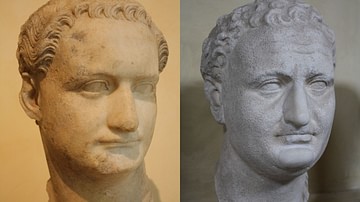
Suetonius
Gaius Suetonius Tranquillus (c. 69 – c. 130/140 CE), better known simply as Suetonius, was a Roman writer whose most famous work is his biographies of the first 12 Caesars. With a position close to the imperial court he was able to...

Definition
Pax Mongolica - Trade and Cultural Exchange in the Mongol Empire
The Mongol Empire was the largest land empire in world history, at about 22,000,000 square kilometers (850,000 square miles). The term Pax Mongolica (Mongol Peace) refers to the way this massive...

Definition
Apis
Apis was the most important and highly regarded bull deity of ancient Egypt. His original name in Egyptian was Api, Hapi, or Hep; Apis is the Greek name. He is not, however, associated with the god Hapi/Hep who was linked to the inundation...

Definition
Third Dynasty of Egypt
The Third Dynasty of Egypt (c. 2670-2613 BCE) begins with king Djoser, famous for his Step Pyramid at Saqqara. Although there are some sources which claim a king named Sanakht (also known as Nebra) founded the Third Dynasty...

Definition
Battle of Thermopylae
Thermopylae is a mountain pass near the sea in northern Greece which was the site of several battles in antiquity, the most famous being that between Persians and Greeks in August 480 BCE. Despite being greatly inferior in...

Definition
Ancient Chinese Art
Ancient China covered a vast and ever-changing geopolitical landscape, and the art it produced over three millennia is, unsurprisingly, just as varied. Still, despite continuous indigenous technical developments, changes in...

Definition
Peloponnesian War
The Peloponnesian War between Athens and Sparta and their respective allies came in two stages: from c. 460 to 446 and from 431 to 404 BCE. With battles at home and abroad, the long and complex conflict was damaging to both sides...

Definition
Yayoi Period
The Yayoi Period is one of the oldest historical periods of Japan spanning from c. 300 BCE to c. 250 CE, preceded by the Jomon Period and followed by the Kofun Period. The name Yayoi comes from the district in Tokyo where the first...
Definition
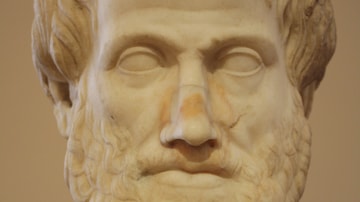
Aristotle
Aristotle of Stagira (l. 384-322 BCE) was a Greek philosopher who pioneered systematic, scientific examination in literally every area of human knowledge and was known, in his time, as "the man who knew everything" and later simply...

Definition
Marcus Agrippa
Marcus Vipsanius Agrippa (l. 64/62 – 12 BCE) was Augustus' (r. 27 BCE - 14 CE) most trusted and unshakably loyal general and his right-hand man in the administration of the city of Rome. Although his name is forever connected with...
