
Search
Remove Ads
Advertisement

 This answer was generated by
 Search Results

Article
Epona
Epona was a Celtic goddess. Her name contains an allusion to the horse: in Celtic, "epos" means “horse” and the suffix “-ona” affixed simply means “on”. Epona is the patron goddess of mares and foals. The oldest information about the...
Image
Epona
A stone statue representing the Celtic goddess Epona with two horses, an animal she was often associated with. 200 CE. (Historic Museum of Bern)

Article
The Ancient Celtic Pantheon
The ancient Celtic pantheon consisted of over 400 gods and goddesses who represented everything from rivers to warfare. With perhaps the exception of Lugh, the Celtic gods were not universally worshipped across Iron Age...
Article
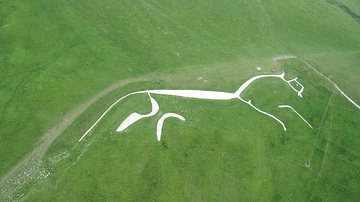
The White Horse of Uffington
The cutting of huge figures or geoglyphs into the turf of English hillsides has been going on for more than 3000 years. There are 56 hill figures scattered around England, with the vast majority on the chalk downlands...

Video
Ancient Celtic Religion, Druids and Funerary Beliefs
The Ancient Celtic religion was a polytheistic one, with numerous gods with sometimes overlapping responsibilities. The ancient Celts, who occupied parts of western and central Europe during the Late...

Definition
Ancient Celts
The ancient Celts were various tribal groups living in parts of western and central Europe in the Late Bronze Age and through the Iron Age (c. 700 BCE to c. 400 CE). Given the name Celts by ancient writers, these tribes and their...

Definition
Ancient Celtic Religion
The polytheistic religion of the ancient Celts in Iron Age Europe remains obscure for lack of written records, but archaeology and accounts by classical authors help us to piece together a number of the key gods, sacred...

Article
A Roman Trail in the Moselle Valley
The Moselle Valley is Germany's oldest winegrowing region. The Romans brought viticulture to this area and planted vines along the Moselle River 2000 years ago. After settling the region c. 50 BCE and establishing...
