
Search
Remove Ads
Advertisement
Search Results
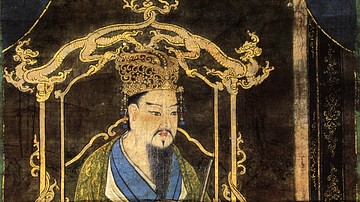
Image
Emperor Kammu
A 16th century CE portrait on silk of Japanese Emperor Kammu (r. 781 to 806 CE) who is most noted for relocating the capital to Heiankyo (Kyoto) in 784 CE. (Enryaku-ji Monastery, near Kyoto, Japan)

Image
Emperor Gaozu of Tang
A portrait of Chinese emperor Gaozu, founder of the Tang Dynasty, r. 618-626 CE.

Image
Jianwen Emperor
A painted silk scroll portrait of the Jianwen Emperor (r. 1398-1402 CE), the second ruler of the Chinese Ming dynasty (1368-1644 CE).

Image
Yongle Emperor
A silk scroll portrait of the Yongle Emperor (aka Chengzu or Yung Lo, r. 1403-1424 CE) who was the third ruler of the Chinese Ming Dynasty (1368-1644 CE). (National Palace Museum, Taibei)
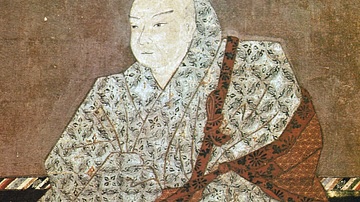
Image
Emperor Toba
An illustration depicting Japanese Emperor Toba (r. 1107-1123 CE)
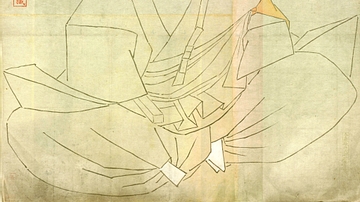
Image
Emperor Shirakawa
An illustration depicting Japanese Emperor Shirakawa (r. 1073-1086 CE).

Definition
Byzantine Empire
The Byzantine Empire existed from 330 to 1453. It is often called the Eastern Roman Empire or simply Byzantium. The Byzantine capital was founded at Constantinople by Constantine I (r. 306-337). The Byzantine Empire varied in size over the...

Definition
Ancient Japan
Ancient Japan has made unique contributions to world culture which include the Shinto religion and its architecture, distinctive art objects such as haniwa figurines, the oldest pottery vessels in the world, the largest wooden buildings anywhere...

Definition
Claudius - The Unlikely Roman Emperor
Claudius (10 BCE to 54 CE) was the fourth Roman emperor, who reigned from 41 to 54 CE. Though a member of the imperial Julio-Claudian Dynasty, his rise to power had always seemed unlikely. Indeed, for much of his life, he had been ostracized...
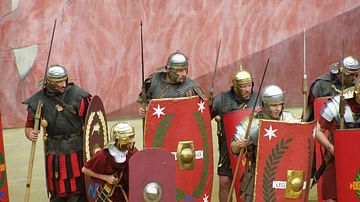
Definition
Legio I Adiutrix
Legio I Adiutrix was a legion of the Roman army formed from veteran sailors after the death of Roman emperor Nero (r. 54-68 CE). During its long career, the legion accompanied Trajan (r. 98-117 CE) on his Dacian and Parthian campaigns, fought...
