
Search
Did you mean: Eris?
Remove Ads
Advertisement
Search Results

Article
Enuma Elish - The Babylonian Epic of Creation - Full Text
The Enuma Elish (also known as The Seven Tablets of Creation) is the Babylonian creation myth whose title is derived from the opening lines of the piece, "When on High". The myth tells the story of the great god Marduk's victory over the...

Article
Philo of Byzantium's On the Seven Wonders
Philo of Byzantium's On the Seven Wonders (225 BCE) is the first known list of the Seven Wonders of the Ancient World (though it may have been based on earlier works now lost). Philo's list differs from the standard Seven Wonders in replacing...

Article
Gorgias' On Nature (On the Non-Existent)
Gorgias of Leontini (l. c. 427 BCE) was a famous Greek Sophist who claimed that nothing exists and, even if it does, its nature cannot be understood and, even if it could be, one is not able to communicate that understanding to another person...
Image
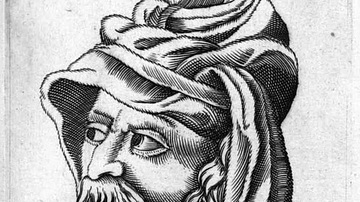
Pyrrho
Greek philosopher Pyrrho of Elis, engraving from the book Illustrium philosophorum et sapientum effigies ab eorum numistatibus extractae by Girolamo Olgiati, 1580.
Image
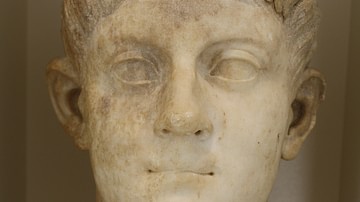
Nero
A marble portrait head of Nero, 54-68 CE, provenance: Elis. Olympia Archaeological Museum.

Video
Origin and History of the Ancient Olympic Games
The Olympic Games as we know them today began in April of 1896 in Athens, where the city welcomed 13 nations to compete, but this video is going way back to the year 776 BCE and it's going to explore the origin and history of the Ancient...

Video
Introduction to Ancient Scepticism: Pyrrhonism
In this introduction to Ancient Scepticism, I look at Pyrrhonism through its four most important philosophers: Pyrrho of Elis, Timon, Aenesidemus, and Sextus Empiricus. First I look at some of the basic arguments and problems laid down by...
