
Search
Remove Ads
Advertisement
Search Results

Article
Battles & Conquests Of The Ottoman Empire (1299-1683)
Spanning across three continents and holding dominance over the Black and Mediterranean Seas, the Ottoman Sultanate (1299-1922) was a global military superpower between the 15th and 17th centuries...

Video
Humayun's Tomb, Delhi (UNESCO/NHK)
This tomb, built in 1570, is of particular cultural significance as it was the first garden-tomb on the Indian subcontinent. It inspired several major architectural innovations, culminating in the construction of...
Definition
Shajara al-Durr
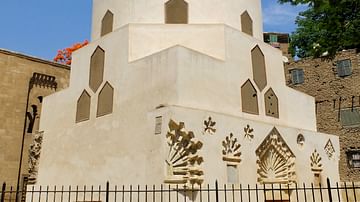
Shajara al-Durr (r. 1250) was the founder of the Mamluk Dynasty in Egypt, and she was the first and only woman to sit on the Islamic Egyptian throne. She held the title of sultana for only 80 days but left a lasting mark through...

Definition
Timur - The Brutal Conqueror of Central Asia
Timur (1336-1405), also known as Tamerlane, Temür, or Timur Leng, was the founder of the Timurid Empire (1370-1507), which had its heartlands in modern-day Uzbekistan and capital at Samarkand. A Muslim Turkic...

Image
The Qutb Minar
Qutb Minar, photograph by Juan Ángel Piqueras, Mehrauli, South Delhi, Delhi, India, 18 August 2026. The Qutb Minar (also spelled Qutub or Qutab Minar) is the world's tallest brick minaret, rising to a height of 72.5 meters (238...

Image
Map of Medieval India, c. 1360
Medieval India around the mid-14th century (c. 1360) was characterized by political fragmentation, regional consolidation, and intense interaction between Islamic sultanates and long-established Indic polities. Following...

Image
Map of Timur’s Empire and Campaigns, 1370–1405 - The rise and the expansion of Tamerlane across Eurasia
The Timurid Empire under Timur (reign 1370–1405) emerged from the fragmented political world of the western Chagatai Khanate in Central Asia. Born near Kesh...

Definition
Islamic Caliphates
Caliphate (“Khilafat” in Arabic) was a semi-religious political system of governance in Islam, in which the territories of the Islamic empire in the Middle East and North Africa and the people within were ruled by a supreme...

Article
The Siege of Acre, 1291 CE
The Siege of Acre in 1291 CE was the final fatal blow to Christian Crusader ambitions in the Holy Land. Acre had always been the most important Christian-held port in the Levant, but when it finally fell on 18 May 1291...

Image
Razia Sultan Tomb
Tomb of Raziya Sultan, photograph by Varun Shiv Kapur, Delhi, 17 November 2015. After a coup plot and uprising against her by powerful nobles, Razia Sultan was killed on 14 October 1240. She was buried initially in Kaithal...
