
Search
Did you mean: Dacia?
Remove Ads
Advertisement
Search Results

Image
Cave 19, Ajanta, Deccan
The chaitya facade of Cave 19, Ajanta, north-west Deccan, India. The columned porch, cushion column capitals, and ornate decorative sculpture are typical of Gupta architecture (4-6th century CE). The relief panels show scenes from the life...

Article
Mandu - City of Joy
The city of Mandu is situated about 35 km from Dhar in the Madhya Pradesh region of northern-central India. Most of the city's monuments date to the 15th and 16th century CE. The city is located on a hill which rises 633 m above the sea level...
Definition
Ajanta
Approximately 67 miles (107 km) to the north of Aurangabad in the Indhyadri range of Western Ghats lie the caves of Ajanta. The 30 caves, famous for their early Buddhist temple architecture and many delicately drawn murals, are located in...
Image
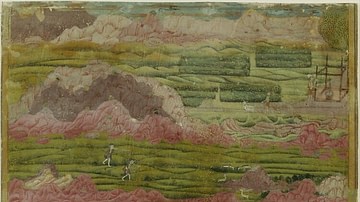
Chand Bibi Hawking with Attendants in a Landscape
A painting on a popular Deccan theme showing the legendary queen of Ahmadnagar, Chand Bibi. The queen famously defended her fortress against a Mughal army in the 16th century. The horse's lower body is red to signify blood, a symbol of bravery...

Definition
Chandragupta Maurya
Chandragupta Maurya (c. 321 - c. 297 BCE), known as Sandrakottos (or Sandrokottos) to the Greeks, was the founder of the Maurya Dynasty (4th-2nd century BCE) and is credited with the setting up of the first (nearly) pan-Indian empire. Aided...

Definition
Koh-i-Noor
The Koh-i-Noor diamond (also Koh-i-Nur or Kūh-e Nūr) is one of the largest and most famous cut diamonds in the world. It was most likely found in southern India between 1100 and 1300. The name of the stone is Persian meaning ‘Mountain of...
Definition
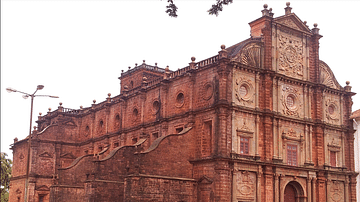
Portuguese Goa
Goa, located on the west coast of India, was a Portuguese colony from 1510 to 1961. The small coastal area was conquered by Afonso de Albuquerque (c. 1453-1515) and became an important trade hub for the Eastern spice trade. Goa was the capital...
Definition
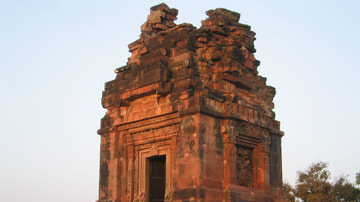
Gupta Architecture
The Gupta Dynasty (4th-6th century) in North Central India saw the first purpose-built Hindu (and also Buddhist) temples which evolved from the earlier tradition of rock-cut shrines. Adorned with towers and elaborate carvings, these temples...

Definition
Hindu Architecture
Hindu architecture evolved over the centuries from simple rock-cut cave shrines to massive and ornate temples which spread across the Indian sub-continent and beyond, forming a canonical style which is still adhered to today in modern Hindu...

Definition
Magadha Kingdom
Magadha was an ancient kingdom located on the Indo-Gangetic plains in eastern India and spread over what is today the modern state of Bihar. At the height of its power, it claimed suzerainty over the entire eastern part of the country (roughly...
