
Search
Did you mean: Cyclades?
Remove Ads
Advertisement
Search Results

Article
The Life of Antisthenes of Athens in Diogenes Laertius
Antisthenes (c. 445-365 BCE) was a Greek philosopher who founded the Cynic School of Athens. He was a follower of Socrates and appears in Plato's Phaedo as one of those present at Socrates' death...

Definition
Ancient Greek Theatre
Greek theatre began in the 6th century BCE in Athens with the performance of tragedy plays at religious festivals. These, in turn, inspired the genre of Greek comedy plays. The two types of Greek drama would be hugely popular...

Definition
Ancient Greek Tragedy
Greek tragedy was a popular and influential form of drama performed in theatres across ancient Greece from the late 6th century BCE. The most famous playwrights of the genre were Aeschylus, Sophocles, and Euripides and many...

Definition
Ancient Greek Comedy
Ancient Greek comedy was a popular and influential form of theatre performed across ancient Greece from the 6th century BCE. The most famous playwrights of the genre were Aristophanes and Menander and their works and those...

Image
The Blinding of Polyphemus
The Blinding of Polyphemus, cast reconstruction of the sculpture group from the villa of Tiberius at Sperlonga (Italy), dating from the 1st century CE.
Image
Marble Head of Polyphemus
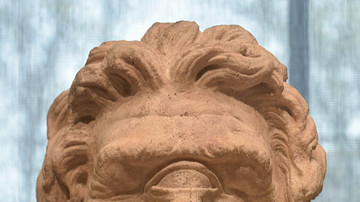
A marble head of Polyphemus, perhaps part of a large-scale sculptural ensemble depicting the blinding of Polyphemos, similar to a group found in an imperial dining grotto at Sperlonga, south of Rome. Dated to about 150...

Image
Lekythos, Odysseus & Polyphemus
Oil, especially olive oil, is stored in a specialized Greek pottery; lekythos (pleural, lekythoi). Many lekythoi were found inside tombs; they were used to anointg the dead bodies of single men. Mainly dull red and...

Article
Greek Theatre Architecture
The ancient Greeks built open-air theatres where the public could watch the performances of Greek comedy, tragedy, and satyr plays. They then exported the idea to their colonies throughout the Aegean so that theatres became...

Article
Theatre of Dionysos Eleuthereus
The theatre of Dionysos Eleuthereus on the south slope of the acropolis of Athens was first built in the 6th century BCE. Modified and expanded over the centuries, it is the oldest Greek theatre and is the site where...

Image Gallery
A Gallery of Monsters and Creatures of Greek Mythology
The myths and legends of ancient Greece included a wide variety of fearsome creatures and monsters, such as dragons, giants, demons, and multiformed beings like the sphinx, minotaur, centaurs, and...
