
Search
Remove Ads
Advertisement
Search Results

Definition
Anschluss
The Anschluss ('fusion') of 12 March 1938 was the annexation and formal union of Austria with Germany. Adolf Hitler (1889-1945), the Nazi leader of Germany, dreamed of an empire which enclosed all German speakers, his 'Greater Germany'...
Definition
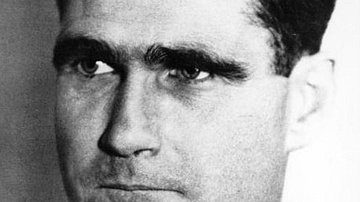
Rudolf Hess
Rudolf Hess (1894-1987) was deputy leader of the German Nazi Party and a key figure in the fascist regime of Adolf Hitler (1889-1945) until his bizarre decision in 1941 to fly to Scotland. Hess believed he could persuade Britain to...

Definition
Alfred Rosenberg - The Infamous Nazi Race Theorist
Alfred Rosenberg (1893-1946) was an Estonian-born Nazi who propounded anti-Semitic racial theory and anti-Christian values. Rosenberg's theories matched those of the leader of Nazi Germany Adolf Hitler...

Definition
Margaret Thatcher - The Iron Lady of British Politics
Margaret Thatcher served as Prime Minister of the United Kingdom from 4 May 1979 to 28 November 1990. Although the United Kingdom emerged militarily victorious from World War II (1939-45), it was still...

Definition
Kosrau I
Kosrau I (r. 531-579 CE) was the greatest king of the Sassanian Empire (224-651 CE) in virtually every aspect of his reign. He reformed the military, the Persian government, expanded his territories, engaged in large-scale building...

Image
Vladimir Lenin, 1920
A 1920 photograph of Vladimir Lenin (1870-1924). Lenin led the Bolshevik faction of socialists in pre-revolution Russia and then seized power in November 1917 in the Bolshevik Revolution, becoming head of the Soviet state.

Image
First Issue of Pravda
The first page of the first issue of the Russian political newspaper Pravda (May, 1912). Edited by socialists, the newspaper became the official mouthpiece of the Russian Bolshevik/Communist Party.

Image
McCarthyism 1950
A gouache on paper painting titled McCarthyism 1950 by Nicha Sursock. This is part of a series of 43 works representing the history of the USA. Joseph McCarthy, flanked by Roy Kohn and David Schine, leading his anti-Communist...

Article
What Were the Consequences of WWII?
The consequences of the Second World War (1939-45) were many and varied. Nazi Germany, Fascist Italy, and military-dominated Japan were all defeated. Many occupied countries were liberated and regained their freedom...

Article
How Did Hitler Rise to Power?
The rise of Adolf Hitler (1889-1945), the Nazi dictator of Germany from 1933, was enabled by those already in power eager to take advantage of his popularity. Hitler promised to make Germany great again after the humiliation...
