
Search
Remove Ads
Advertisement
Search Results

Definition
Cambyses II
Cambyses II (r. 530-522 BCE) was the second king of the Achaemenid Empire. The Greek historian Herodotus portrays Cambyses as a mad king who committed many acts of sacrilege during his stay in Egypt, including the slaying of the sacred Apis...

Definition
Plains Indians
The Plains Indians (also known as Native Americans of the Plains and Prairie, Indigenous Peoples of the Great Plains) are the original inhabitants of the western plains of North America, now part of the United States and Canada. They are...

Definition
William IV of Great Britain
William IV of Great Britain (r. 1830-1837) succeeded his elder brother George IV of Great Britain (r. 1820-1830) to become the fifth Hanoverian monarch. William had a successful naval career, and his reign is best remembered for the democratic...

Definition
Caernarfon Castle
Caernarfon Castle (aka Caernarvon) is located in North Wales and was first built from 1283 CE by Edward I of England (r. 1272-1307 CE) to help, along with several other major castles, control the newly conquered area. As the administrative...
Definition
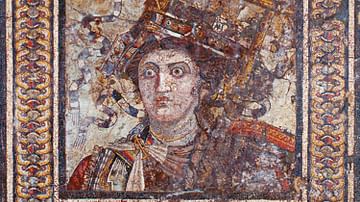
Berenice II Euergetis
Berenice II Euergetis (c. 267-221 BCE) was a pre-eminent Hellenistic queen, who ruled together with her husband Ptolemy III (r. 246-221 BCE), when the Ptolemaic kingdom was at the height of its power, dominating most of the eastern Mediterranean...

Definition
Festival of the Federation
The Festival of the Federation (Fête de la Fédération) was a celebration that occurred on the Champ de Mars outside Paris on 14 July 1790, the first anniversary of the Storming of the Bastille. With over 300,000 people in attendance, the...

Definition
Amastris
Amastris (c. 340/39-285 BCE) was a niece of the Persian king Darius III (r. 336-330 BCE) through her father Oxyathres. She was married in succession to Alexander's general Craterus, the tyrant Dionysius of Heraclea, and finally to Lysimachus...

Collection
Food in the Ancient World
Meals in the ancient Mediterranean revolved around the common staples of cereals, vegetables, fruit, and olive oil, with an occasional bit of fish and meat thrown in for those who could afford it. The Phoenicians and Greeks then spread their...

Article
Daily Life in Ancient China
Daily life in ancient China changed through the centuries but reflected the values of the presence of gods and one's ancestors in almost every time period. Villages like Banpo show evidence of a matriarchal society, where there was a priestly...
Article
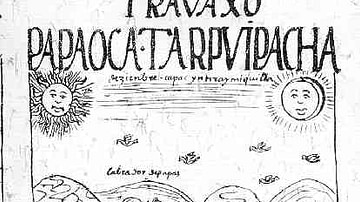
Daily Life in the Inca Empire
Daily life in the Inca empire was characterised by strong family relationships, agricultural labour, sometimes enforced state or military service for males, and occasional lighter moments of festivities to celebrate important life events...
