
Search
Remove Ads
Advertisement
Search Results

Definition
Qanat
The qanat (called foggara in North Africa and the Levant, falaj in the United Arab Emirates and Oman, kariz in Iran, and puquios in Peru) is an ancient Middle Eastern irrigation technique in which a long tunnel is dug into arid land that...

Definition
Oxus Treasure
The Oxus Treasure is a collection of 180 artifacts of precious metal, dated to the Achaemenid Empire (c. 550-330 BCE), which were discovered on the north bank of the Oxus River near the town of Takht-i Sangin in Tajikstan between...

Definition
Byzantine Coinage
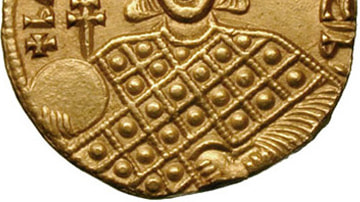
The coinage of the Byzantine Empire continued that of its more ancient predecessors and functioned as a convenient method of payment for goods and services, especially to soldiers and officials, and as a means for people to pay...
Definition
Basil I
Basil I was emperor of the Byzantine Empire from 867 to 886 CE and he founded the "Macedonian" dynasty which lasted for over 200 years. Basil was an Armenian from a humble background who had risen to become the second most powerful man...

Definition
Michael III
Michael III, also known as “Michael the Drunkard” by his detractors, was emperor of the Byzantine Empire from 842 to 867 CE. Never quite escaping the shadow of his mother Theodora, who ruled as regent in his name until c. 855 CE...

Definition
Yurt
A yurt (ger in Mongolian) is a large circular tent made of wool felt stretched over a wooden frame used by nomadic peoples of the Asian steppe since before written records began. Yurts are especially associated with Mongol herders and...

Article
Follow the Money. The Coinage of Later Imperial Rome: A Reflection of Economic Stress and Decline
Unlike the practice of professional numismatists, I prefer to see the “big picture”. So, my entire Roman coin collection, all 250 pieces, from Julius Caesar to...

Article
Hadrian's Travels
No other Roman emperor travelled as much as Hadrian (r. 117-138 CE). The 'restless' emperor spent more time travelling than in Rome, devoting half of his 21-year reign to the inspection of the provinces. His travels provided...

Definition
Ancient Egyptian Warfare - The Force That Built an Empire
Ancient Egyptian Warfare developed from an army of conscripts in the Pre-Dynastic Period (circa 3150-2613 BCE) through the early era of the Middle Kingdom (2040-1782 BCE), supplied to the king by...

Definition
Hadrian
Hadrian (l. 78-138 CE) was emperor of Rome (r. 117-138 CE) and is recognized as the third of the Five Good Emperors (Nerva, Trajan, Hadrian, Antoninus Pius, and Marcus Aurelius) who ruled justly. His reign marked the height of the Roman...
