
Search
Remove Ads
Advertisement
Search Results

Article
Retreat from Kabul in 1842
The Retreat from Kabul in 1842 was one of the most notorious disasters in the history of the British Empire. An East India Company army had invaded Afghanistan but was obliged to withdraw. This army of 4,500 soldiers and 12,000 camp followers...

Article
Wall Reliefs: Ashurnasirpal II's War Scenes at the British Museum
The Mighty King 600 of their warriors I put to the sword and decapitated; 400 I took alive; 3,000 captives I brought forth; I took possession of the city for myself: the living soldiers, and heads to the city of Amidi the royal city, I sent...

Definition
Portuguese Cochin
Cochin, located on the southwest coast of India, was a Portuguese colony from 1503 to 1663. Known to the Portuguese as Cochim, it was one of several important cities on India’s Malabar Coast and a great trade centre for spices like pepper...
Definition
Portuguese Goa
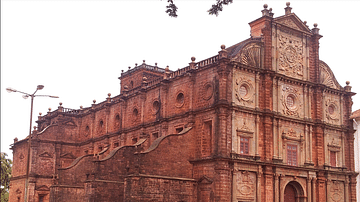
Goa, located on the west coast of India, was a Portuguese colony from 1510 to 1961. The small coastal area was conquered by Afonso de Albuquerque (c. 1453-1515) and became an important trade hub for the Eastern spice trade. Goa was the capital...

Definition
Vasco da Gama
Vasco da Gama (c. 1469-1524) was a Portuguese navigator who, in 1497-9, sailed around the Cape of Good Hope in southern Africa and arrived at Calicut (now Kozhikode) on the south-west coast of India. This was the first direct voyage from...

Definition
Pushyabhuti Dynasty
The Pushyabhuti Dynasty (c. 500 CE - 647 CE) rose after the downfall of the Gupta Empire (3rd century CE - 6th century CE) in the 6th century CE in northern India. Also known as the Vardhana or Pushpabhuti Dynasty, the core area of their...
Article
Battle of Buxar
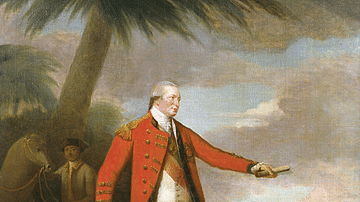
The Battle of Buxar (aka Bhaksar or Baksar) in Bihar, northeast India, on 22-23 October 1764 saw a British East India Company (EIC) army led by Hector Munro (1726-1805) gain victory against the combined forces of the Nawab of Awadh (aka Oudh...

Article
The Origins of British Pub Names
Pubs remain a prominent feature of the rural and urban landscapes of Britain, but their names very often date back to medieval times. Red lions, white horses, and colourful characters peer from pub signs as landlords choose names to represent...

Interview
Interview: Bejeweled Sri Lanka
The first comprehensive survey of Sri Lankan art organized by an American museum, The Jeweled Isle: Art from Sri Lanka, on show now at the LACMA in Los Angeles, California, presents some 250 works addressing nearly two millennia of Sri Lankan...

Article
Battle of Aliwal
The Battle of Aliwal on 28 January 1846 saw the British East India Company (EIC) defeat the Sikh Empire. One of four major battles during the First Anglo-Sikh War (1845-6), Aliwal was a decisive victory where the EIC's Bengal Lancers cavalry...
