
Search
Remove Ads
Advertisement
Search Results

Image
Athenian Silver Tetradrachm
Athenian silver tetradrachm, depicting Athena on the obverse and an owl with an olive branch on the reverse, 479-454 BCE.
Alpha Bank Numismatics Collection, Kerkyra, Corfu.
Image
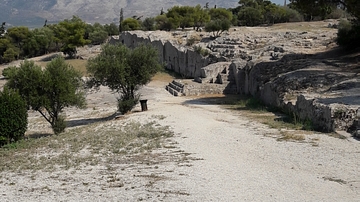
The Athenian Assembly
Remains of the Athenian Assembly on the Pynx
![Athenian Tribute List [Fragment]](https://www.worldhistory.org/img/c/p/360x202/5691.jpg?v=1599427803)
Image
Athenian Tribute List [Fragment]
Athenian Tribute List Annus 25, 430-429 BCE.
Image
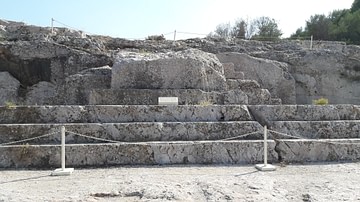
Speaker's Platform at the Athenian Assembly
Stone cut steps leading up to the speaker's platform at the Athenian Assembly on Pynx
Image
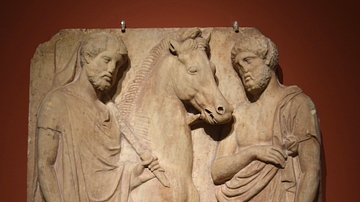
Athenian Horseman Grave Stele
The marble grave stele of an Athenian horseman. Attica, 370s BCE. (Pushkin Museum, Moscow)

Definition
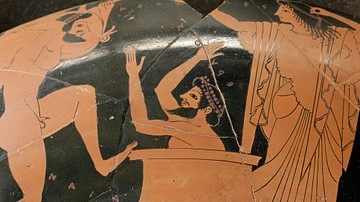
Draco's Law Code
Draco was an aristocrat who in 7th century BCE Athens was handed the task of composing a new body of laws. We have no particular clues concerning his life and general biography and the only certainty is that, as an aristocrat...
Definition
The Children of Heracles
The Children of Heracles (Heraclidae) is one of Euripides' lesser-known and least popular works, as is the myth surrounding the tragedy play. Its date is also uncertain, possibly written in the late 430s or early 420s BCE...

Definition
Ancient Persian Governors
The Achaemenid Persian Empire functioned as well as it did because of the efficient bureaucracy established by its founder Cyrus the Great (r. c. 550-530 BCE) which was administered through the satrapy system. A Persian...

Definition
Ardashir I
Ardashir I (l. c. 180-241 CE, r. 224-240 CE) was the founder of the Persian Sassanian Empire (224-651 CE) and father of the great Sassanian king Shapur I (r. 240-270 CE). He is also known as Ardashir I Babakan, Ardeshir I, Ardashir...

Image
Athenian Agora and Acropolis
Artist's impression of a view across the Agora on an early summer evening, looking southeast towards the Acropolis. Trees and plants had been planted in the Agora from the time of Cimon in the mid fifth century BC. Left...
