
Search
Remove Ads
Advertisement
Search Results
Definition
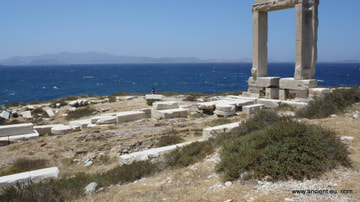
Naxos
Naxos, with an area of 430 km², is the largest island in the Cyclades archipelago. The island enjoyed its most prosperous periods in the early Bronze Age and again in the Archaic and Classical periods. Naxos in Mythology In certain...

Definition
Plutus (Play)
Plutus (aka Wealth) is a play written by the great Greek comedy playwright Aristophanes in 388 BCE. It was the last of his plays to be performed during his lifetime. Like his earlier play Ecclesiazusae (The Assemblywomen), Wealth...

Definition
Ancient Greek Literature
Greek literature has influenced not only its Roman neighbors to the west but also countless generations across the European continent. Greek writers are responsible for the introduction of such genres as poetry, tragedy...

Article
Early Muslim Conquests (622-656 CE)
Islam arose as a religious and socio-political force in Arabia in the 7th century CE (610 CE onwards). The Islamic Prophet Muhammad (l. 570-632 CE), despite facing resistance and persecution, amassed a huge following...

Definition
Nineveh - The Great Cultural Center That Became the "City of Sin"
Nineveh (modern-day Mosul, Iraq) was one of the oldest and greatest cities in antiquity. It was originally known as Ninua, a trade center, and would become one of the largest and most affluent...

Definition
Cusco
Cuzco (also Cusco or Qosqo) was the religious and administrative capital of the Inca Empire which flourished in ancient Peru between c. 1400 and 1534 CE. The Incas controlled territory from Quito to Santiago, making theirs the largest...

Definition
Antioch
Antioch or Antiochia was an ancient city located on the Orontes River near the Amanus Mountains in Syria. The “land of four cities” - Seleucia, Apamea, Laodicea, and Antiochia - was founded by Seleucus I Nicator (Victor) between 301...

Definition
Rashidun Caliphate
The first four caliphs of the Islamic empire – Abu Bakr, Umar, Uthman, and Ali are referred to as Rashidun (rightly guided) Caliphs (632-661 CE) by mainstream Sunni Muslims. Their tenure started with the death of Prophet Muhammad...

Definition
Avesta
The Avesta is the scripture of Zoroastrianism which developed from an oral tradition founded by the prophet Zoroaster (Zarathustra, Zartosht) sometime between c. 1500-1000 BCE. The title is generally accepted as meaning “praise”, though...
Definition
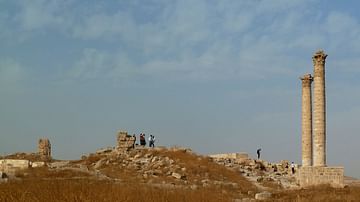
Edessa
Edessa (modern Urfa), located today in south-east Turkey but once part of upper Mesopotamia on the frontier of the Syrian desert, was an important city throughout antiquity and the Middle Ages. A city within the Seleucid Empire, then...
