
Search
Search Results

Collection
Aztec Religion & Culture
Aztec religion and culture flourished between c. 1345 and 1521 and, at its height, influenced the majority of the people of northern Mesoamerica. Great monarchs such as Montezuma imposed Aztec ideals across the area of modern-day Mexico...
Definition
Zarathustra
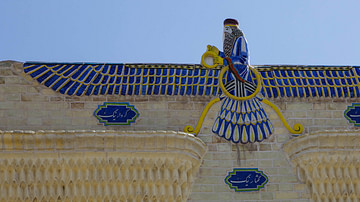
Zarathustra (also given as Zoroaster, Zartosht, Zarathustra Spitama, l. c. 1500-1000 BCE) was the Persian priest-turned-prophet who founded the religion of Zoroastrianism (also given as Mazdayasna “devotion to Mazda”), the first monotheistic...

Collection
Mesopotamian Goddesses
Mesopotamian goddesses are among the oldest in the world. Inanna is commonly referenced as the most ancient goddess, first worshipped during the Uruk Period (~4000–3100 BCE). Veneration of Inanna and the others developed throughout the Early...

Article
The Spread of Islam in Ancient Africa
Following the conquest of North Africa by Muslim Arabs in the 7th century CE, Islam spread throughout West Africa via merchants, traders, scholars, and missionaries, that is largely through peaceful means whereby African rulers either tolerated...

Definition
Ancient Syria
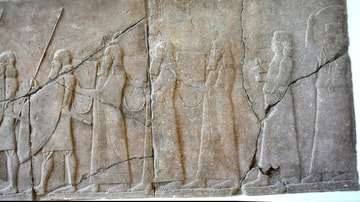
Syria is a country located in the Middle East on the shore of the Mediterranean Sea and bordered, from the north down to the west, by Turkey, Iraq, Jordan, Israel, and Lebanon. It is one of the oldest inhabited regions in the world with archaeological...
Article
Festivals in Ancient Mesopotamia - Courting the Goodwill of the Gods
Festivals in ancient Mesopotamia honored the patron deity of a city-state or the primary god of the city that controlled a region or empire. The earliest, the Akitu festival, was first observed in Sumer in the Early Dynastic period (circa...

Definition
Chogha Zanbil - The "Basket Mound" of the Gods
Chogha Zanbil (literally "basket mound") is an ancient Elamite temple complex located in the modern-day province of Khuzestan, Iran. It is also known as Dur-Untash (Fortress/City/Town of Untash), Tchogha Zanbil, and Al Untash Napirisha ("Place...

Definition
Near East - A Modern Term for an Ancient Land
The 'Near East' is a modern-age term for the region formerly known as the 'Middle East,' comprising Armenia, Cyprus, Egypt, Iraq, Iran, Israel, Jordan, Lebanon, Palestine, Syria, and part of Turkey, corresponding to ancient Urartu, Mesopotamia...

Collection
Maya Religion & Culture
Maya religion and culture is among the most advanced and sophisticated of the Pre-Colombian Americas as evidenced by the ruins of their great cities and what remains of their writings after most were burned by the Spanish in 1562. The Maya...

Collection
Mesopotamian Gods - A Brief Survey of Some Great Mesopotamian Deities
The gods of Mesopotamia are first evidenced during the Ubaid Period (circa 6500-4000 BCE) when temples were raised to them, but their worship developed during the Uruk Period (circa 4000-3100 BCE) and their names appear in writing beginning...
