
Search
Did you mean: Amenhotep III?
Remove Ads
Advertisement
Search Results

Article
The Egyptian Amulet: Pious Symbols of Spiritual Life
Material Objects & Cultures Material objects convey volumes about the people who possessed them. Cultures and societies in every generation are in part classified - either correctly or incorrectly...

Article
Mummification in Ancient Egypt
The practice of mummifying the dead began in ancient Egypt c. 3500 BCE. The English word mummy comes from the Latin mumia which is derived from the Persian mum meaning 'wax' and refers to an embalmed corpse which was...
Image
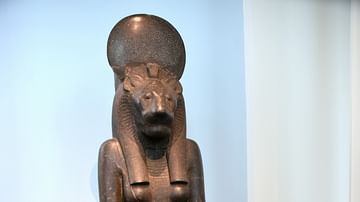
Statue of a Sitting Figure of Goddess Sekhmet
Sekhmet was a lion goddess, whose name means "the mighty one", and she personified the aggressive aspects of other goddesses. Sekhmet was a daughter of the sun god Ra. She usually wears the sun-disc on...
Image
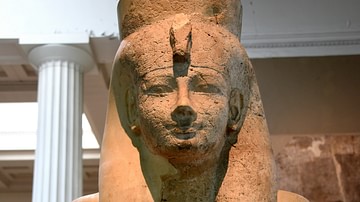
The Goddess Hathor
This bust comes from a triad statue that showed King Amenhotep III flanked by the god Osiris and the goddess Hathor. It is one of the numerous statues that adorned Amenhotep III's mortuary temple at Thebes. Some 150 years later...

Image
Boat of Queen Mutemwia
This sculpture represents a sacred boat on a sledge. It included a seated figure of Queen Mutemwia, wife of Thutmose IV. Only her legs and right hand remained intact, but part of the head is also in the British Museum. Mutemwia...

Article
Games, Sports & Recreation in Ancient Egypt
Although the ancient Egyptians are often depicted as death-obsessed and dour, they actually had a great appreciation for life and their culture reflected their belief in existence as an eternal journey imbued...

Article
Color in Ancient Egypt
The ancient Egyptians had a great appreciation for life which is clearly depicted through their art. Images of people enjoying themselves - whether in this life or the next - are as plentiful as those most often seen of the...

Article
Hadrian's Travels
No other Roman emperor travelled as much as Hadrian (r. 117-138 CE). The 'restless' emperor spent more time travelling than in Rome, devoting half of his 21-year reign to the inspection of the provinces. His travels provided...

Article
Ancient Egyptian Taxes & the Cattle Count
The gods of ancient Egypt freely gave their bounty to the people who worked the land, but this did not exempt those farmers from paying taxes on that bounty to the government. Egypt was a cashless society until...

Article
Ten Ancient Egypt Facts You Need to Know - Fun Trivia About Ancient Egypt
Ancient Egypt is defined as the civilization that flourished in North Africa between circa 6000 and 30 BCE – from the Predynastic Period in Egypt (circa 6000 to circa 3150 BCE) through...
