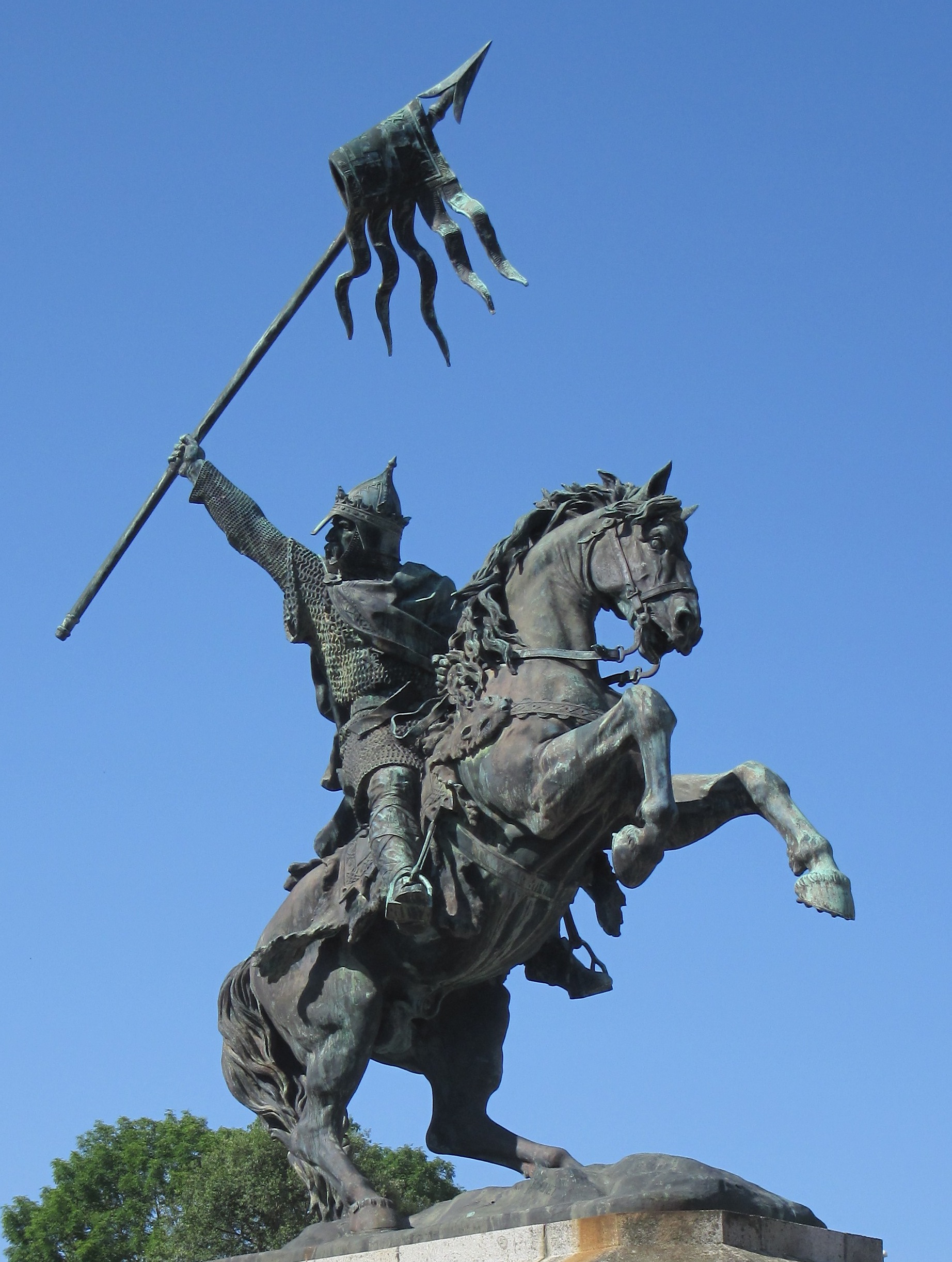
Statue of William the Conqueror


William the Conqueror (r. 1066-1087) was the illegitimate son of Robert I of Normandy and inherited the Duchy of Normandy from his father at 7. He grew up amidst northern France's struggling and chaotic politics, eventually emerging as one of the most feared warriors in the region. When his cousin, Edward the Confessor, King of England, died in 1066, William claimed the English throne and defeated a rival claimant, Harold Godwinson, at the Battle of Hastings. He spent much of his reign establishing Norman authority over the English, facing several revolts, all of which were successfully suppressed. His conquest brought new language, governance, laws and architecture to his kingdom, significantly changing England’s physical landscape, literature, customs and politics.
The statue was built by French sculptor Louis Rochet in 1851 in Falaise, France, the town of William’s birth. It is made of bronze and depicts William on horseback, holding a spear with a banner tied around it in his right hand. The six small figures on the statue's base were added in 1875, each representing his predecessors as Duke of Normandy.