
Search
Remove Ads
Advertisement

 This answer was generated by
 Search Results
Definition
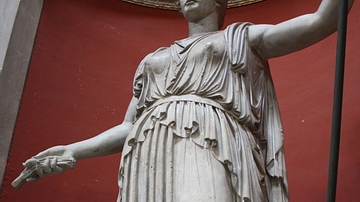
Ceres
Ceres is the goddess of agriculture and the harvest in Roman mythology. Her favor would bring humankind plentiful harvests and fruitful crops, but her wrath brought blight, drought, and famine. Usually depicted as a matron, her symbols included...
Image
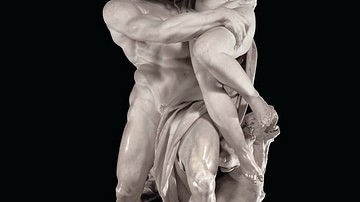
The Rape of Proserpina
The Rape of Proserpina, white marble sculpture by Gian Lorenzo Bernini, 1621-22.
Galleria Borghese, Rome.
Photo by Int3gr4te, 2007.

Definition
Pluto
Pluto is the god of the Underworld in Roman mythology. His Greek counterpart was Hades. Pluto chose never to sit on Olympus with the other gods and goddesses, preferring to remain in the Underworld. Family Pluto (Hades) was the son of...
Definition
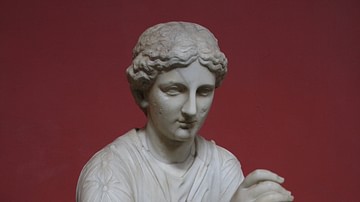
Calliope
Calliope (also spelt Kalliope) is the Muse of epic poetry and heroic song in Greek mythology. She is considered the leader of the Muses and the most honoured of them all. She is often represented in art with a tablet on her knee and a stylus...

Definition
Venus
In Roman mythology, Venus was the goddess of love, sex, beauty, and fertility. She was the Roman counterpart to the Greek goddess Aphrodite. However, Roman Venus had many abilities beyond the Greek Aphrodite; she was a goddess of victory...
Definition
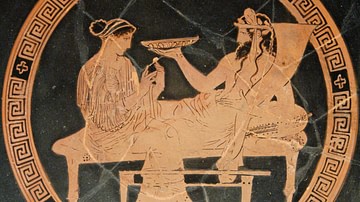
Persephone
Persephone (aka Kore) was the Greek goddess of agriculture and vegetation, especially grain, and the wife of Hades, the ruler of the Underworld. Persephone was an important element of the Eleusinian Mysteries and the Thesmophoria festival...

Definition
Demeter
Demeter was one of the oldest gods in the ancient Greek pantheon. Demeter was a goddess of agriculture and guaranteed the fertility of the earth. She protected both farming and vegetation. The close connection with the earth was inherited...

Definition
Mercury (Deity)
Mercury (Mercurius) was the Roman god of commerce, often serving as a mediator between the gods and mortals, his winged feet giving him the advantage of speed, and so was the patron of circulation in general - of people, goods and messages...
Image
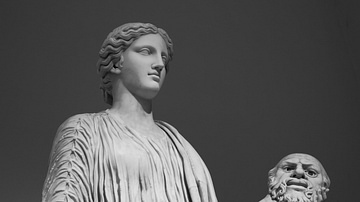
Statue of Persephone, Naples
Roman statue of the goddess Persephone (also known as Proserpina). The restoration of the statue has her holding a theatre mask, like one of the Muses. c. 140-160 CE. (National Archaeological Museum of Naples)
Image
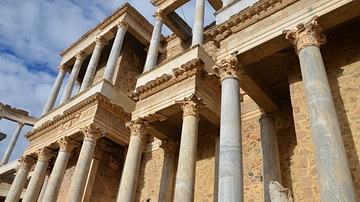
Stage Building of the Theatre of Augusta Emerita (Mérida, Spain)
The front of the stage (scaenae frons) of the Roman theatre of Augusta Emerita (modern-day Mérida in Spain) is the most oustanding feature of the building. It consists of a high podium 2.60 metres (8.5 feet) high with Corinthian columns almost...
