
Search
Remove Ads
Advertisement

 This answer was generated by
 Search Results

Article
Zengids & the Crusaders: Race for Egypt (1163-1169 CE)
In the aftermath of the failure of the Second Crusade (1147-1149 CE), which only managed to bring Damascus under Nur ad-Din's (sometimes also given as Nur al-Din, l. 1118-1174 CE) dominion, Egypt...

Article
Saladin & the Unification of the Muslim Front: 1169-1187 CE
Saladin (c. 1137 – 1193 CE), the Muslim ruler who crushed the mighty Crusader army at the Horns of Hattin (1187 CE) and re-took Jerusalem after 88 years of Crusader control, was born in a world...

Article
The Siege of Damascus, 1148 CE
The siege of Damascus in 1148 CE was the final act of the Second Crusade (1147-1149 CE). Lasting a mere four days from 24 to 28 July, the siege by a combined western European army was not successful, and the Crusade...

Definition
Second Crusade
The Second Crusade (1147-1149) was a military campaign organised by the Pope and European nobles to recapture the city of Edessa in Mesopotamia which had fallen in 1144 to the Muslim Seljuk Turks. Despite an army of 60,000 and...
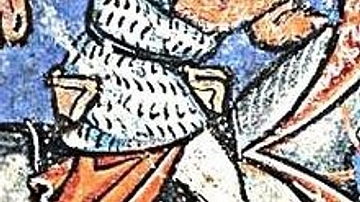
Image
Nur ad-Din, from the History of Outremer
A miniature painting of Sultan Nur ad-Din (also spelt Nur al-Din, 1118 - 1170 CE), from a manuscript of the History of Outremer by William of Tyre (c. 1130 - 1186 CE). The manuscript containing this image...

Definition
Saladin
Saladin (1137-93) was the Muslim Sultan of Egypt and Syria (r. 1174-1193) who shocked the western world by defeating an army of the Christian Crusader states at the Battle of Hattin and then capturing Jerusalem in 1187. Saladin all but...

Article
Royal Women in the Mughal Empire
It was not only the Mughal emperors that left an indelible mark in the history of the Indian subcontinent but also the queens and princesses. The latter's contributions to art, architecture, literature, cuisine, refinement...
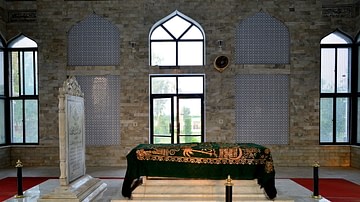
Definition
Muhammad Ghori
Shihab al-Din (also Muʿizz al-Din Muhammad ibn Sam), popularly known as Muhammad Ghori (r. 1173-1206 CE), was the Muslim ruler who laid the foundation for the subsequent Islamic ruling dynasties of India which saw its pinnacle...
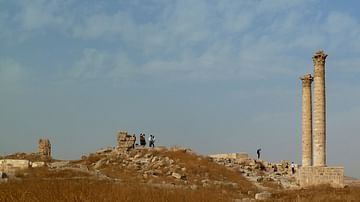
Definition
Edessa
Edessa (modern Urfa), located today in south-east Turkey but once part of upper Mesopotamia on the frontier of the Syrian desert, was an important city throughout antiquity and the Middle Ages. A city within the Seleucid Empire, then...

Definition
Razia Sultan - The First Female Muslim Ruler of India
Sultan Razia (Raziyyat-Ud-Dunya Wa Ud-Din, r. 1236-1240) was one of the few women rulers in the Indian subcontinent and the first and only female Sultan of Delhi. Despite facing Herculean challenges...
