
Search
Remove Ads
Advertisement

 This answer was generated by
Search Results

Video
Mogao Caves (UNESCO/NHK)
Situated at a strategic point along the Silk Route, at the crossroads of trade as well as religious, cultural and intellectual influences, the 492 cells and cave sanctuaries in Mogao, located in China, are famous for their...

Definition
Ajanta
Approximately 67 miles (107 km) to the north of Aurangabad in the Indhyadri range of Western Ghats lie the caves of Ajanta. The 30 caves, famous for their early Buddhist temple architecture and many delicately drawn murals, are located...

Article
The Ajanta Caves
The 30 caves at Ajanta lie to the north of Aurangabad in the Indhyadri range of Western Ghats. The caves, famous for their temple architecture and many delicately drawn murals, are located in a 76 m high, horseshoe-shaped escarpment...
Article
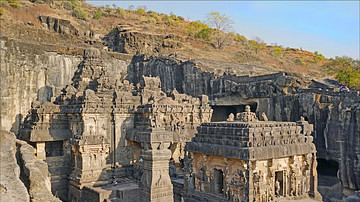
Ellora Caves
Ellora (also known as Elura and, in ancient times, as Elapura) is a sacred site in Maharastra, central India. The Ellora Caves are listed by UNESCO as a World Heritage Site and is celebrated for its Hindu, Buddhist, and Jain temples...

Article
Cliffs, Caves, Churches: A Weekend in Doolin, Ireland
County Clare, Ireland, is best known for the Cliffs of Moher, the ancient dolmen of Poulnabrone, and its rich musical heritage, but it offers many other fascinating sites and, most importantly, the...

Image
Ellora Caves Map
A map of the caves and temples at Ellora, in Maharastra, central India. The structures are Hindu, Buddhist, and Jain. 6th-8th century CE.

Image
Mural, Ajanta Caves
Some of the most evocative murals were created on the walls of the Ajanta Caves (Maharashtra, India) between 2nd century BCE and 6th century CE. The expressive face, playfulness of light and shade and presence of lustrous...

Image
The Ajanta Caves
A panoramic view of the Ajanta Caves, India. The rock-cut Buddhist cave shrines date from the 2nd century BCE to the 6th century CE.

Image
War Elephants of the Rashtrakutas, Ellora Caves
This war scene shown in a temple frieze in the Kailashanatha Temple depicts the use of chariots and elephants in warfare during the period of the imperial Rashtrakutas (eighth to tenth centuries CE). Location...

Image
Barabar Caves Interior
The rock-cut caves at Barabar were built by the Mauryan kings Ashoka and his successors by hollowing out the hillside. These caves were used by Buddhist monks as retreats. The insides of the caves are so highly polished as...
