
Search

 This answer was generated by
 Search Results
Image
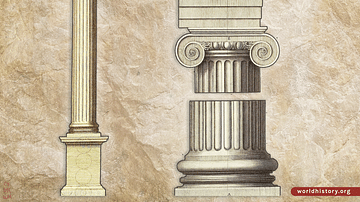
The Ionic Order, Classical Orders of Architecture
The Classical Orders of Architecture (Doric, Ionic, Corinthian, Tuscan, and Composite), originating in ancient Greece and refined by the Romans, are fundamental design principles that significantly influence classical and neoclassical structures...

Definition
Order of the Garter
The Most Noble Order of the Garter is the highest order of knighthood in Britain and the most exclusive with traditionally only 24 knights as full members at any one time, along with the reigning monarch and the Prince of Wales. Created by...

Definition
Knights Templar
The Knights Templar were established c. 1119 and given papal recognition in 1129. It was a Catholic medieval military order whose members combined martial prowess with a monastic life to defend Christian holy sites and pilgrims in the Middle...

Image
The Classical Orders of Architecture - From Greece to Rome, the Five Pillars of Architectural Design
The five classical orders of architecture: Doric, Ionic, Corinthian, Tuscan, and Composite, form a codified system of proportion, decoration, and structural logic that emerged in the Greek world (c. 7th–4th centuries BCE) and was later adapted...

Image
Extent of the Teutonic Order c. 1300 CE
A map indicating the commanderies and territories (shaded blue) under the control of the Teutonic Order c. 1300 CE.

Definition
Teutonic Knight
A medieval Teutonic Knight was a member of the Catholic military Deutscher Orden or Teutonic Order, officially founded in March 1198 CE. The first mission of the Teutonic knights was to help retake Jerusalem from the Arabs in the Third Crusade...

Image
Ionic Capital
Ionic capital from the Acropolis, Athens, (447-432 BCE).
Image
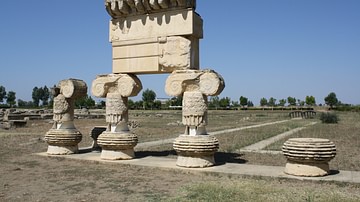
Ionic Temple, Metapontum
Ionic capitals and architrave from a temple of unknown dedication at Metapontum, Magna Graecia, southern Italy. 480-470 BCE.

Image
Ionic Columns at Temple of Garni
The Temple of Garni temple has twenty-four ionic columns, which are 6.54 m (21.5 ft) high. Six are located in the front and the back parts of the temple, and eight are located on the sides. Some researchers believe that the columns originally...

Image
Ionic Capital, Metapontum
An Ionic capital from a temple of unknown dedication at Metapontum, Magna Graecia, southern Italy. 480-470 BCE.
