
Search
Remove Ads
Advertisement

 This answer was generated by
 Search Results
Article
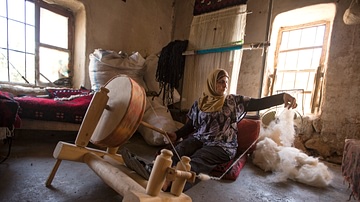
Ancient Handicrafts in Rural Lebanon
Traditional Lebanese handicrafts are considered to be a major sector of the living cultural heritage in the rural areas of Lebanon. Transmitted from one generation to another, traditional rural Lebanese handicrafts have been able to persist...

Article
Top 5 Archaeological Sites in Lebanon
Home to some of the Middle East’s most majestic ancient ruins, Lebanon has a rich and varied heritage with over 5,000 years of recorded history. Over the millennia, different conquering empires have left their footprints on the architecture...
Image
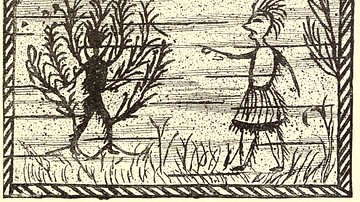
Glooscap Turning Man into a Cedar Tree
Glooscap Turning Man into a Cedar Tree, scraping on birchbark by Tomah Joseph, featured in The Algonquin Legends of New England by Charles Godfrey Leland, 1884.

Image
Cedar Hill - Last Home of Frederick Douglass
Cedar Hill, photograph by Walter Smalling in the Historic American Buildings Survey, October 1977. Frederick Douglass moved to this house in the late 1870s and lived there until his death in 1895. In 1988, the site was added to the list...

Article
Interview: Medieval Christian Art in the Levant
Medievalists retain misconceptions and myths about Oriental Christians. Indeed, the fact that the Middle East is the birthplace of Christianity is an afterthought for many. During the Middle Ages, Christians from different creeds and confessions...
Image
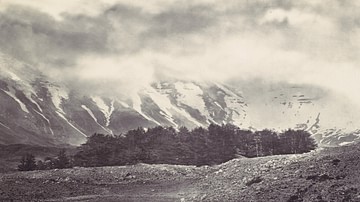
Cedars of Lebanon, 1857 CE
The first well-known pictures of the Cedar of Lebanon taken by the British photographer and orientalist Francis Frith (1822-1898 CE) in 1857 CE. The grove, known as the Cedars of God, is located in Bsharri, Lebanon and is considered holy...
Image
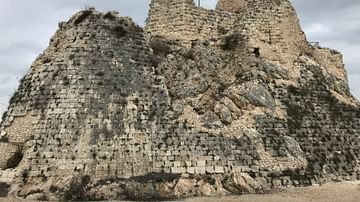
Beaufort Castle, Lebanon
Beaufort or Belfort Castle, known locally as Qal'at al-Shaqif, was a Crusader fortress in Southern Lebanon. The castle is situated on the site of a former fortress, which was captured by the Crusaders and given to the lords of Sidon.
Image
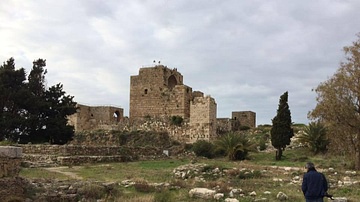
Byblos Castle, Lebanon
Byblos Castle, Lebanon, built by the Crusaders in the 12th century CE, it was surrounded by a moat. It belonged to the Genoese Embracio family, whose members were lord of Gibelet. The castle is adjacent to the Phoenician archaeological site...
Image
Weaving in Rural Lebanon
Weaving is one of the traditional handicrafts still practised in the rural areas of Lebanon.
Image
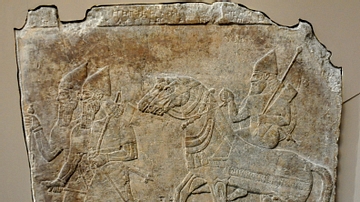
Assyrian Soldiers in Lebanon
This gypsum wall relief was part of a corner panel. It depicts Assyrian soldiers with horses crossing a mountainous area. The wavy lines and spirals at the bottom of the scene represent a river. The cuneiform inscriptions on the reverse refer...
